A roof leak after a storm is stressful enough. The insurance process can make it worse when a homeowner waits too long, accepts an incomplete scope, or authorizes repairs before documenting the damage. Knowing how to file roof insurance claims correctly gives you a stronger starting position and helps protect the property you have worked hard to maintain.
For Bay Area homeowners and property owners, the goal is not simply to get a claim approved. It is to establish the full extent of covered damage, prevent additional loss, and restore the roof with materials and workmanship that will perform for the long term.
How to File Roof Insurance Claims Step by Step
The first hours after roof damage matter. Wind, fallen branches, sudden leaks, and storm-driven debris can all create conditions that worsen quickly, especially when water reaches insulation, decking, ceilings, or electrical areas.
Start by protecting people and the property. If there is an active leak, move valuables away from the affected area and use buckets or other temporary measures to contain water. Do not climb onto a wet, steep, or visibly damaged roof. A temporary tarp or emergency repair may be necessary, but keep every invoice and take photographs before work begins whenever it is safe to do so.
Next, notify your insurance carrier promptly. Most policies require timely reporting, and delays can create questions about whether later damage resulted from the original event or from failure to mitigate the loss. When you call, ask for your claim number, the adjuster’s contact information, and the deadline for submitting documents.
Describe the facts, not a conclusion. Explain the date of loss, the weather event or incident, the visible damage, and any interior leaking. Avoid estimating repair costs or stating that the roof needs full replacement before a qualified inspection has been completed. Your contractor’s findings and the insurer’s inspection should establish the scope.
Document the Damage Before It Changes
Insurance claims are built on evidence. The more complete your documentation is, the easier it is to show the condition of the roof immediately after the loss.
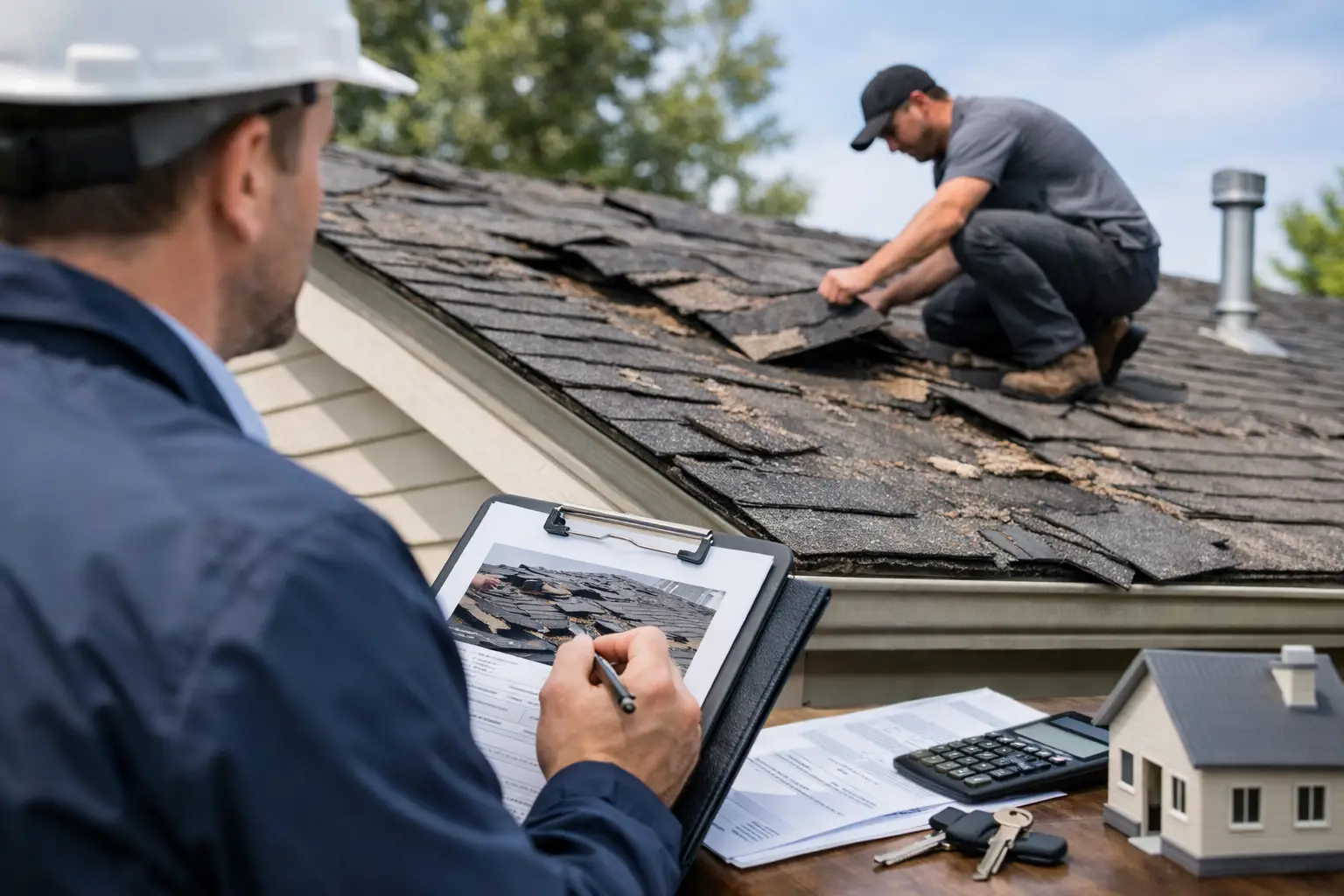
Take wide photos of each roof elevation from the ground, then close-up photos of missing shingles, cracked or displaced tiles, punctures, damaged flashing, gutters, vents, skylights, and fallen debris. Inside the building, photograph ceiling stains, wet drywall, bubbling paint, damp insulation, and damaged belongings. Use date-stamped photos when possible, and keep a simple written timeline of what happened and when.
For commercial properties, documentation should also include affected suites, common areas, equipment rooms, and any business interruption concerns. Flat roofing systems can sustain damage that is difficult to identify from ground level, including seam separation, membrane punctures, ponding-related failures, or compromised flashing details. A professional roof assessment is particularly valuable in these cases because the visible symptom may not reveal the full path of water intrusion.
Keep copies of your policy declaration page, claim correspondence, photos, repair invoices, and contractor estimates in one folder. Do not rely solely on text messages or verbal discussions. Clear records reduce confusion when the claim moves from the initial report to inspection, estimating, and final payment.
Review Your Policy Before Assuming Coverage
A roof insurance claim depends on the cause of damage and the language in your policy. Sudden, accidental damage from a covered peril may be handled very differently from wear, deferred maintenance, gradual leakage, or an aging roof that has reached the end of its service life.
Read the sections addressing roof coverage, deductibles, exclusions, actual cash value, replacement cost value, ordinance and law coverage, and matching. These details affect what the carrier may pay and what remains your responsibility.
Actual cash value policies generally account for depreciation. Replacement cost coverage may allow for the recoverable portion of depreciation after approved work is completed and documented. The difference can be substantial, particularly on a larger roof replacement. Your deductible also applies, so an approved claim does not necessarily mean the insurer pays the entire project cost.
California property owners should also understand that an insurer may cover direct physical damage without automatically covering every upgrade a homeowner wants. If local code requires changes to ventilation, underlayment, flashing, or other components during replacement, ordinance and law coverage may become relevant. The answer depends on the policy and the project requirements, not on a contractor’s preference.
Schedule an Independent Roofing Inspection
An insurance adjuster evaluates the claim for the carrier. A qualified roofing contractor evaluates the roof system and the work needed to restore it. Those roles can overlap, but they are not the same.
Schedule an inspection with an experienced, properly insured roofing contractor before or around the time of the adjuster visit. The inspection should assess more than the obvious damaged area. A dependable scope considers roofing materials, underlayment, decking, penetrations, flashing, ridge and hip details, drainage, gutters, ventilation, and evidence of water intrusion below the roof surface.
Ask for a written, itemized estimate that identifies damaged components and explains the recommended repairs or replacement. Vague proposals make it harder to compare the contractor’s findings with the insurance estimate. A clear scope also helps prevent a common and expensive problem: approving a repair that addresses visible damage but leaves connected failures unresolved.
At Titanium Roof Innovations, claim-related assessments are approached with the same discipline as any high-performance roofing project: identify the damage, define the proper repair scope, and provide transparent information so the owner can make an informed decision.
Meet the Adjuster Prepared, Not Pressured
If possible, have your roofing contractor present during the adjuster inspection. This is not about turning the meeting into an argument. It is about making sure damaged areas are accessible, relevant findings are identified, and technical questions receive accurate answers.
Bring your photos, timeline, contractor estimate, and claim number. Point out interior damage and any temporary repairs made to prevent further loss. If the roof has been repaired or maintained recently, provide those records as well. Maintenance documentation can help demonstrate that the problem followed a specific event rather than long-term neglect.
After the inspection, request a copy of the insurer’s estimate and review it carefully. Check whether it includes all affected roof sections and related items such as flashing, vents, gutters, underlayment, disposal, permits, and interior repairs where applicable. Insurance estimates often use line-item pricing and may not capture every condition until additional evidence is provided.
Respond Carefully to a Low or Partial Estimate
A first estimate is not always the final scope. If the insurer’s assessment misses documented damage or does not include work necessary to complete a proper repair, ask questions in writing and provide supporting documentation from your contractor.
A supplement may be appropriate when concealed damage is found after tear-off or when the approved scope omits required components. For example, damaged decking, deteriorated flashing hidden beneath roofing material, or code-required work may not be visible during an initial exterior inspection. Do not assume these items will be covered, but do not absorb them without first documenting the condition and submitting the information through the proper claim process.
Stay factual and professional. Identify the omitted item, explain why it is necessary, attach photos or inspection findings, and ask the carrier to review it. Keep a record of every call, email, and submitted document, including the date and the person you spoke with.
Avoid Mistakes That Can Weaken Your Claim
The fastest way to complicate a claim is to make permanent repairs before the insurer has a reasonable opportunity to inspect, unless immediate work is required to prevent further damage. Emergency mitigation is usually appropriate. Replacing the entire roof before documentation and communication are complete can create avoidable disputes.
Avoid signing a contract that promises to cover your deductible or guarantees insurance approval. Be wary of storm-chasing contractors who arrive uninvited, pressure you to sign immediately, or offer vague explanations of coverage. A premium roofing project deserves a contractor with verifiable insurance, clear estimating, accountable project oversight, and a written scope of work.
Also avoid treating normal aging as storm damage. A reputable contractor will be direct about what the roof condition supports. Honest documentation protects your claim and your long-term investment far better than inflated promises.
Move From Claim Approval to Lasting Protection
Once the claim is approved, confirm the final work scope, payment schedule, materials, warranty terms, and any recoverable depreciation requirements before construction begins. Make sure the contractor understands which portions are insurance-funded and which upgrades, if any, are owner-selected.
The lowest estimate is rarely the strongest value when the roof is protecting a high-value home, occupied building, or income-producing property. Quality underlayment, precise flashing, sound drainage details, and disciplined installation determine whether a new roof merely looks complete or performs when the next storm arrives.
A well-managed claim should leave you with more than a check and a patched surface. It should give you a documented, properly restored roof system built to protect your property with confidence for years ahead.