A roof leak rarely starts at a convenient time. It shows up during a hard rain, over a bedroom ceiling, above inventory, or right where water can do the most expensive damage in the shortest amount of time. Emergency roof leak repair is about more than stopping a drip. It is about protecting the structure, limiting interior loss, and making sure a temporary response does not turn into a long-term weakness.
When water enters a building, the visible stain is often only part of the problem. Moisture can travel along rafters, decking, insulation, drywall, and electrical pathways before it becomes obvious indoors. That is why the first few hours matter. A controlled, professional response protects not just the roof, but the value of the property beneath it.
What emergency roof leak repair really means
In practical terms, emergency roof leak repair has two phases. First, the leak must be contained quickly enough to reduce ongoing water intrusion. Second, the roof needs a proper diagnosis and a permanent repair that matches the roofing system, slope, age, and condition of the surrounding materials.
That distinction matters. A tarp, sealant, or patch can be necessary in an emergency, but those measures are not the same as a complete repair. On asphalt shingles, the root issue may be lifted tabs, failed flashing, or punctured underlayment. On tile, the visible broken tile may be only one part of the failure. On flat roofing, water can enter far from where it appears inside. A rushed fix in the wrong spot can buy a few dry days while the hidden damage continues.
What to do first when your roof starts leaking
Safety comes before anything else. If water is near electrical fixtures, outlets, panels, or equipment, that changes the urgency immediately. Move people away from the area and, if it can be done safely, protect valuables, electronics, furnishings, and flooring. Buckets and towels are fine for immediate control indoors, but they should be paired with a serious plan to stop the source.
If the ceiling is bulging, do not ignore it. Water can collect above drywall until the material loses strength. In some cases, controlled drainage into a container may reduce the chance of a sudden collapse, but this is not a decision to make casually around wiring or finished interiors. If there is any doubt, professional help is the right call.
Outside, homeowners are often tempted to climb onto the roof in wet conditions. That is where small emergencies become major injuries. Slippery shingles, fragile tile, saturated underlayment, and storm conditions make roof access risky even for experienced crews. The better move is to document what you can see from the ground and have the system assessed by a qualified roofing professional.
The most common causes behind a sudden leak
Roof leaks feel random, but they usually come from a short list of failure points. Flashing around chimneys, vents, skylights, walls, and valleys is one of the biggest culprits. These transition areas take constant water movement, and when metal shifts, sealant fails, or installation details break down, water finds an opening.
Aging materials are another major factor. Shingles can crack, curl, or lose granules. Tile roofs can slip or break. Flat roof membranes can split, blister, or separate at seams. Even a high-quality roof becomes vulnerable if maintenance has been deferred for too long.
Storm exposure also accelerates failure. Wind can lift edges and loosen components that were already near the end of their service life. Heavy rain tests every weakness at once. In parts of the Bay Area, seasonal weather may not look extreme compared with other regions, but repeated moisture, temperature swings, and UV exposure are enough to expose installation shortcuts and aging materials.
Then there are drainage problems. Clogged gutters, backed-up downspouts, and poor slope conditions can push water where it was never meant to go. Sometimes the leak is not caused by the field of the roof at all. It starts because water cannot exit the system properly.
Temporary fixes vs. permanent repairs
A strong contractor will be direct about this: not every emergency repair is a final repair. Sometimes the right move is to stabilize the roof immediately, then return for a full corrective repair when conditions are dry, safe, and suitable for long-term workmanship.
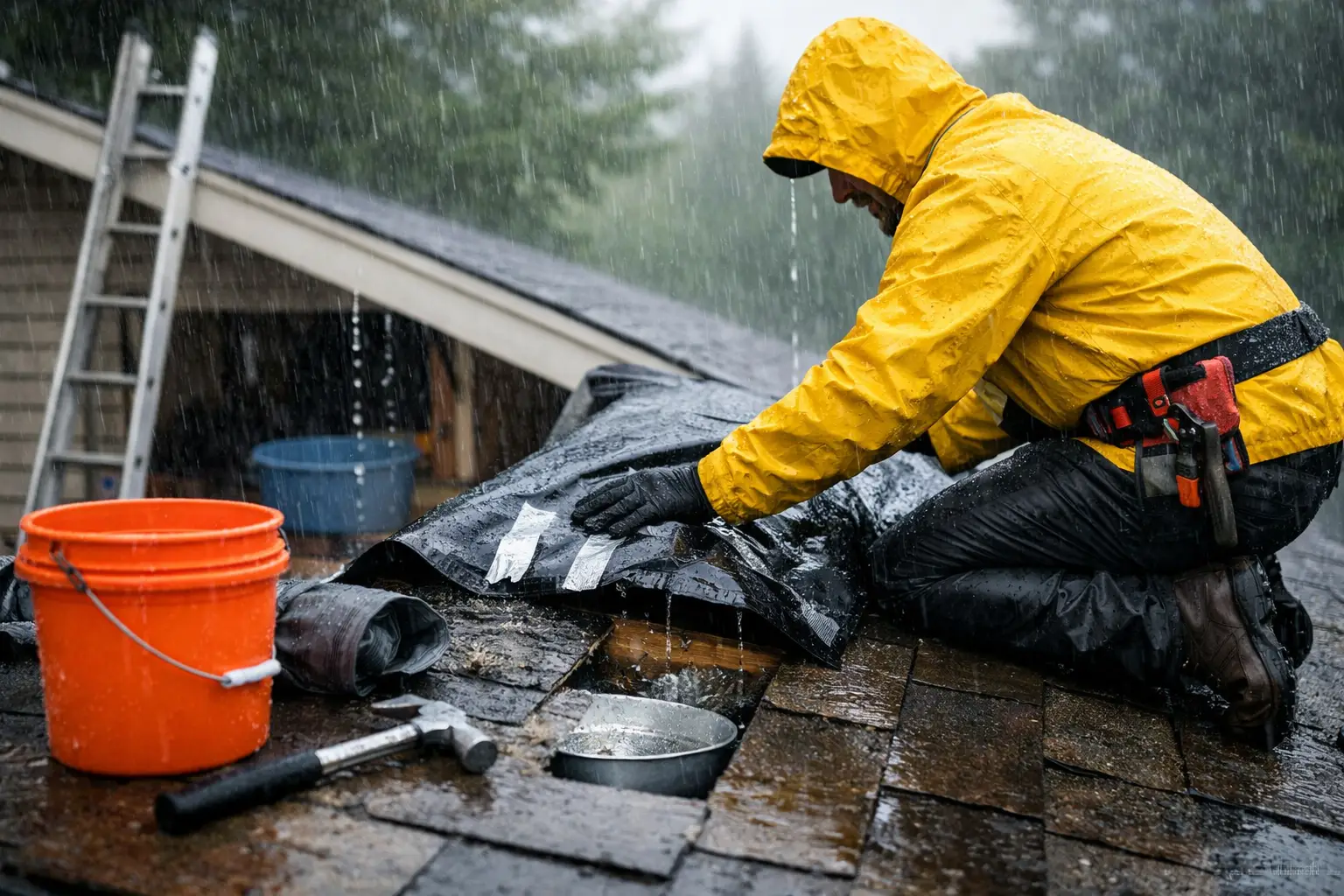
Temporary protection can include targeted coverings, sealed entry points, or isolated patching to stop active intrusion. That response is valuable because it reduces secondary damage to framing, insulation, ceilings, flooring, and contents. But the permanent solution depends on what failed and how far the damage extends.
For example, replacing a few shingles may solve the issue if the leak comes from localized wind damage and the surrounding roof is still sound. That same approach would be inadequate if the decking is compromised, the flashing system is failing, or the roof has reached the point where repeated repairs no longer make financial sense. A premium standard means fixing the cause, not just the symptom.
How a professional emergency roof leak repair is handled
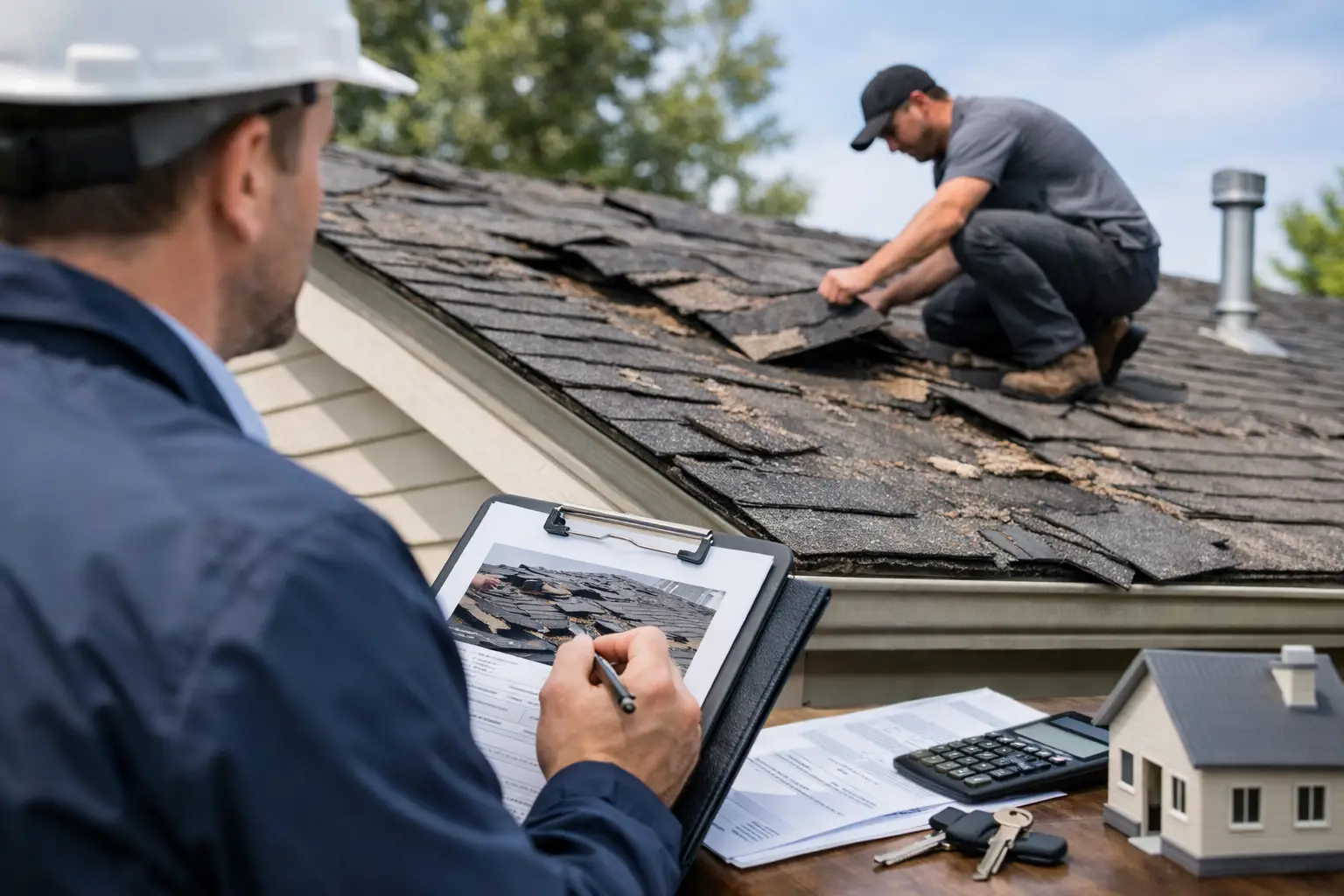
A disciplined roofing team does not start with guesswork. The first step is inspection – both where the leak appears inside and across the likely roof pathways outside. Water rarely travels in a straight line, so experience matters. The goal is to identify the true entry point, assess the extent of damage, and determine whether the surrounding system is still performing.
From there, the repair strategy should be explained clearly. Property owners deserve to know whether the issue is isolated, whether there may be hidden deck or insulation damage, and whether the repair is intended as a temporary safeguard or a permanent correction. Transparency is not a sales extra. In an emergency, it is part of risk management.
On residential properties, this often means evaluating shingles, tile, flashing, underlayment, valleys, vent boots, skylight perimeters, gutters, and roof penetrations. On commercial buildings, the scope may include membrane seams, ponding areas, parapet transitions, drains, curb flashings, and rooftop equipment penetrations. Different systems fail differently, and quality repairs need to match the system in place.
When a leak is a repair issue – and when it points to replacement
This is where honesty matters most. Not every leak means you need a new roof. A single breach on an otherwise healthy system can often be repaired effectively. If the roofing materials are still within a reasonable service life, the decking is sound, and the failure is localized, a targeted repair may be the smartest investment.
But some leaks are warnings, not exceptions. If the roof has multiple active problem areas, visible deterioration, chronic patch history, or widespread material fatigue, emergency service may reveal a bigger structural and financial decision. Continuing to patch a failing roof can cost more over time, especially once interior damage, mold risk, insulation loss, and business interruption are added to the equation.
For commercial owners and property managers, this is especially important. A leak over tenant space, equipment, or inventory is not just a maintenance issue. It is operational exposure. For homeowners, it is the same principle in a different form – your home is your most valuable asset, and a compromised roof puts more than drywall at risk.
Documentation, insurance, and protecting your investment
In an emergency, documentation is often overlooked. It should not be. Photos of interior damage, exterior conditions visible from the ground, and the progression of the leak can help clarify the source and support insurance conversations when storm damage is involved.
That said, insurance does not cover every roof problem. Wear and tear, deferred maintenance, and age-related failure may not qualify the same way sudden storm damage does. This is another reason to work with a contractor who communicates clearly and understands the difference between a repairable event and a larger roofing condition issue. Accurate assessment protects your claim process and your property at the same time.
Choosing the right contractor during an urgent leak
An emergency is exactly when poor workmanship becomes expensive. Fast response matters, but speed without precision is a liability. The right roofing contractor should be able to stabilize the leak, explain the likely cause, document what was found, and outline the next step with confidence.
Look for signs of accountability – proper licensing, insurance, clear estimating, and a repair philosophy built around long-term protection rather than quick patchwork. This is where founder-led oversight and disciplined quality control make a difference. Companies such as Titanium Roof Innovations build trust by treating emergency work as part of a larger promise: protect the asset, reduce the risk, and stand behind the result.
A leaking roof puts pressure on every decision. The best response is calm, fast, and exact. Protect the interior, stay off the roof if conditions are unsafe, and get the problem inspected before a small breach becomes structural damage. The sooner the leak is handled correctly, the more options you keep – and the less you pay for the damage water causes after the fact.