A cracked tile after a wind event is one thing. A roof system that has started failing underneath a beautiful field of aging tile is something else entirely. That is why tile roof repair or replacement is rarely a cosmetic decision. It is a protection decision, and the right answer depends on what is happening below the surface.
Tile roofs are known for longevity, curb appeal, and strong performance in harsh sun. In the Bay Area, they are a premium roofing choice for a reason. But even durable materials reach a point where isolated repairs stop being the responsible option. The real question is not whether a tile can be replaced. It is whether the roof system as a whole is still doing its job.
How to judge tile roof repair or replacement
A tile roof can fail in two very different ways. The first is visible damage to the tiles themselves. The second, and often more serious, is deterioration in the underlayment, flashing, fasteners, or decking that supports the tile system.
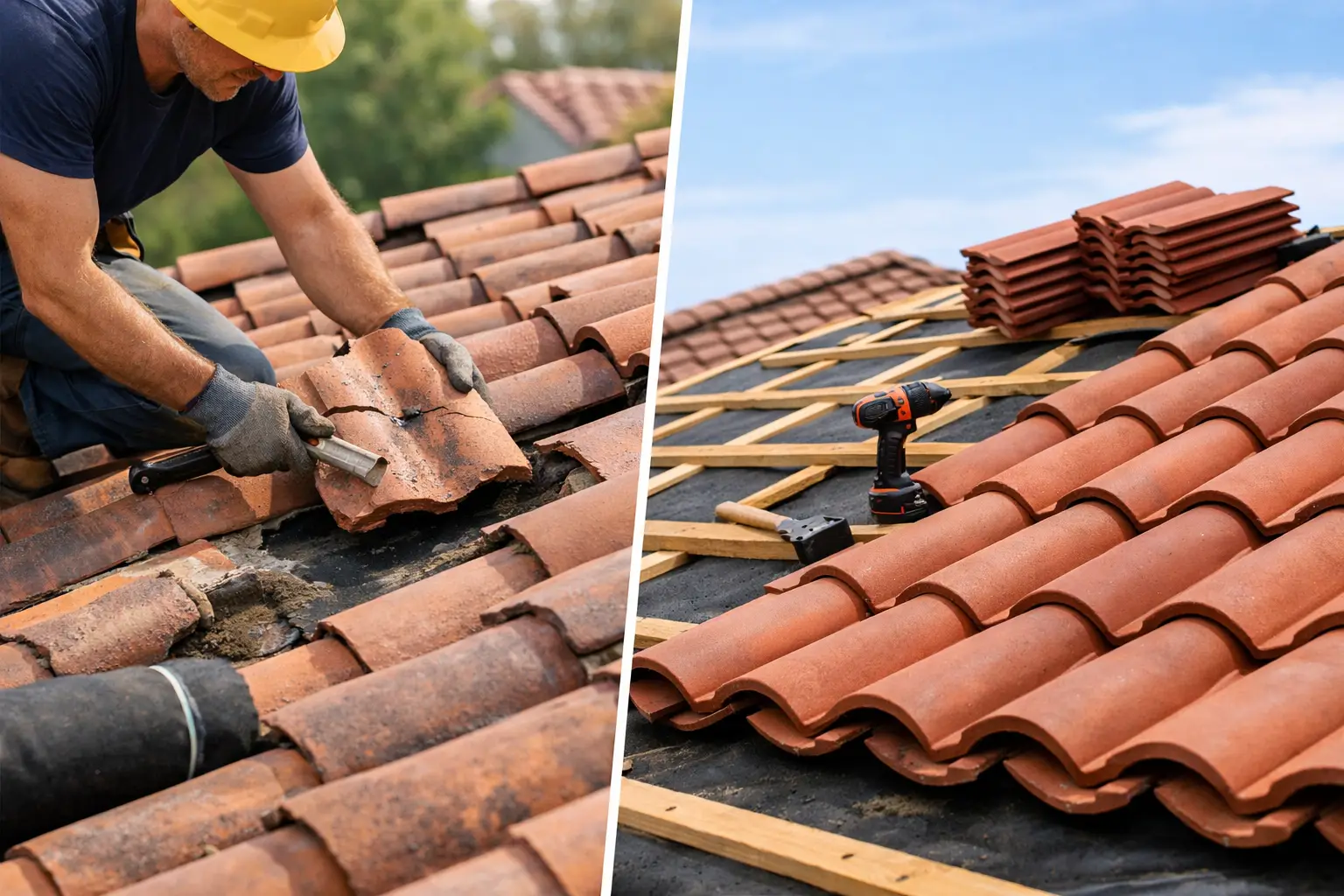
If a few tiles slipped, cracked, or broke because of impact or foot traffic, repair may be the practical solution. When the surrounding roof is in good condition and the waterproofing layers are still sound, targeted repairs can restore protection without the cost of a full replacement.
If leaks are recurring, valleys are weak, flashing details are compromised, or the underlayment has reached the end of its service life, replacement usually becomes the safer investment. Tile is the visible layer, but underlayment is what keeps water out. Homeowners are often surprised to learn that the tiles may still look serviceable while the waterproofing beneath them is no longer reliable.
That distinction matters. A roof should not be judged from the driveway alone.
When repair makes sense
Repair is the right path when the damage is limited and the roof still has meaningful life left in it. A disciplined inspection should confirm that the issue is localized, not systemic.
A good candidate for repair usually has one or more of these conditions: a small number of broken tiles, minor flashing damage around penetrations, isolated leak points, or damage caused by a specific event. In these cases, a skilled contractor can remove and replace damaged components, preserve the surrounding roof, and restore performance.
This approach can be especially effective if the tile profile is still available and the roof has been maintained over time. Matching matters on tile roofs. A repair that protects the home but leaves obvious visual inconsistency may be technically acceptable, yet still disappointing for an owner who cares about architectural appearance.
There is a trade-off, though. A repair addresses the current problem. It does not reset the age of the roof. If the underlayment is already approaching failure, repair may buy time, but not much certainty.
When replacement is the stronger investment
Replacement becomes the better decision when the roof has crossed from isolated issues into broader wear. That line is not always obvious to the untrained eye, which is why careful evaluation matters.
Recurring leaks are one of the clearest signs. If the same roof has been patched multiple times and problems keep returning, the issue is often bigger than a cracked tile. Widespread underlayment deterioration, compromised flashing transitions, and age-related fastening issues can all create a pattern of failure that repair will not solve for long.
Replacement also makes sense when previous repairs were inconsistent or poorly executed. Tile roofs demand precision. Improperly lifted sections, broken surrounding tiles, shortcuts around valleys, and careless flashing work can weaken the entire system. At that point, continuing to patch one section after another often costs more in the long run.
For property owners thinking beyond the next storm season, replacement provides a different level of confidence. It allows the roofing system to be rebuilt correctly, with updated waterproofing, proper ventilation strategy where needed, and details designed to protect the structure for decades. That is a very different outcome from simply keeping an aging roof limping along.
The hidden factor: underlayment life
If there is one issue that decides tile roof repair or replacement more than any other, it is underlayment condition.
Tile itself can last a long time. Concrete and clay tiles are durable materials. But the underlayment beneath them generally does not last as long as the tile field. Once that layer becomes brittle, torn, detached, or worn through at high-stress areas, water intrusion becomes much more likely.
This is why a roof with only a handful of visible broken tiles may still need replacement. If the waterproofing system underneath has failed broadly, replacing a few surface tiles will not fix the root cause.
A premium roofing contractor should inspect more than the obvious leak area. Valleys, transitions, pipe penetrations, wall connections, and previous repair locations often reveal the true condition of the roof. The goal is not to sell more work than needed. The goal is to protect the asset with an accurate diagnosis.
Cost is real, but so is risk
Many owners start with the same question: which option is cheaper? That is understandable, but it is not the full calculation.
Repair has a lower upfront cost. If the issue is truly isolated, that can be the smart financial choice. You preserve capital and avoid replacing a system that still has usable life.
Replacement has a higher initial price, but it can reduce repeated repair costs, interior damage risk, emergency response costs, and uncertainty during heavy rain. It can also preserve property value more effectively when a roof is visibly aging or nearing the end of its service life.
For homeowners preparing to sell, the equation can shift again. A repaired tile roof may be enough if the roof is otherwise sound and the disclosure picture remains clean. If inspection concerns are likely to surface during escrow, replacement may create a stronger position and fewer negotiations.
For commercial owners and property managers, reliability often outweighs short-term savings. A leak over occupied space, tenant improvements, equipment, or inventory is rarely a minor event.
Why the inspection process matters
Not every roofer approaches tile systems with the same level of discipline. That matters because tile roofs are easy to oversimplify and expensive to get wrong.
A proper evaluation should look at broken and displaced tiles, underlayment condition where visible, flashing integrity, deck concerns, drainage patterns, and signs of moisture intrusion inside the structure. It should also account for the age of the system, the history of prior repairs, and whether matching materials are still available.
Just as important, the recommendation should be transparent. If repair is sufficient, that should be stated clearly. If replacement is the more responsible path, you should understand why, what problem it solves, and what level of long-term protection it delivers.
That is where experienced, founder-led oversight makes a difference. Precision roofing work is not about pressure. It is about accountability.
Choosing the right long-term outcome
The best roofing decisions are not driven by fear or guesswork. They are driven by condition, risk, and the level of protection you want from the property.
If your tile roof has isolated damage and the system beneath it remains strong, repair can be the right move. If leaks are recurring, the waterproofing layers are aging out, or past patchwork has created a bigger problem, replacement is often the smarter and more protective investment.
For premium homes and performance-focused properties, the standard should be simple: do the work that truly protects the structure, not just the work that delays the next problem. That is the kind of decision that holds up over time.
A tile roof should add confidence to ownership, not constant uncertainty. If you are weighing repair against replacement, the most valuable next step is a clear inspection from a contractor who treats your roof as a full system, not a quick fix.