A flat roof that looks clean from the ground can still be carrying standing water, failed seams, or insulation that is driving up cooling costs. For Bay Area property owners, TPO PVC roofing is often part of the conversation because both systems offer durable, reflective protection for low-slope roofs. They are not, however, interchangeable materials.
The right choice depends on how the building is used, what sits on the roof, how much chemical or grease exposure it receives, the condition of the existing assembly, and the level of long-term performance expected. A properly designed membrane roof is not simply a sheet installed over a building. It is a complete system built to manage water, sun, movement, and the details where most leaks begin.
What Are TPO and PVC Roofing Systems?
TPO, or thermoplastic polyolefin, is a single-ply roofing membrane commonly installed in white for strong solar reflectivity. PVC, or polyvinyl chloride, is another thermoplastic single-ply membrane with a longer history in commercial roofing. Both are installed in wide sheets, and their seams are heat-welded to create a continuous waterproof surface.
That heat-welded seam is one of the strongest advantages of both systems. Unlike systems that rely primarily on adhesives or asphalt-based laps, properly welded seams become fused at the overlap. When installation is controlled with the right equipment, temperature, speed, and inspection process, the result is a highly dependable barrier against water intrusion.
Both membranes can be mechanically attached, fully adhered, or installed in a ballasted assembly where the structure and project conditions allow. The best attachment method is not a matter of preference. It should be determined by roof deck type, wind exposure, drainage, insulation design, local code requirements, and the building’s intended service life.
TPO PVC Roofing: The Core Differences
TPO is widely selected for projects that need a high-performing white roof with a practical initial investment. It is flexible, reflective, and available in multiple thicknesses. For many office buildings, multifamily properties, retail locations, and residential low-slope sections, it can deliver excellent value when installed over a sound substrate with the correct insulation and flashing details.
PVC generally carries a higher material cost, but it has a meaningful advantage in environments exposed to oils, fats, and many chemicals. That makes it a frequent choice for restaurants, food-processing facilities, and commercial buildings with rooftop exhaust that may release grease-laden vapors. PVC also performs well in conditions where long-term membrane durability and resistance to contamination are central concerns.
The distinction matters because a roof should be matched to its actual environment. Installing a less suitable membrane on a building with persistent grease exposure may create avoidable maintenance issues. On the other hand, paying for PVC on a simple, clean roof with no chemical exposure may not provide enough added value to justify the premium.
Heat Performance Matters in the Bay Area
White TPO and PVC membranes reflect a significant amount of sunlight, which can reduce heat absorbed by the roof surface. That can support indoor comfort and lower cooling demand, especially on broad commercial roof areas with limited shade.
Reflectivity is valuable, but it should not be treated as a standalone energy solution. Insulation level, air sealing, roof deck conditions, HVAC performance, and the building’s use all affect energy results. A bright white membrane over inadequate insulation will not deliver the same benefit as a complete roofing assembly designed for thermal performance.
For residential properties, reflective membranes are often an excellent fit for flat roof sections, modern additions, garages, and accessory structures. For commercial owners, they can support a cleaner roof profile while helping manage solar heat gain. The final design should also account for rooftop equipment, walk paths, drains, curbs, and service access so the membrane is protected after installation.
Installation Quality Determines Roof Performance
Even premium membrane material cannot compensate for poor preparation or careless detailing. Most flat-roof failures do not begin in the open field of the roof. They begin at penetrations, drains, parapet walls, skylights, transitions, terminations, and seams that were not properly welded or secured.
A disciplined installation starts with an assessment of the roof deck and existing assembly. In some cases, a recover installation over an existing roof may be appropriate. In others, trapped moisture, deteriorated materials, structural concerns, or excessive layers require a full tear-off. The correct decision protects the investment instead of covering an existing problem.
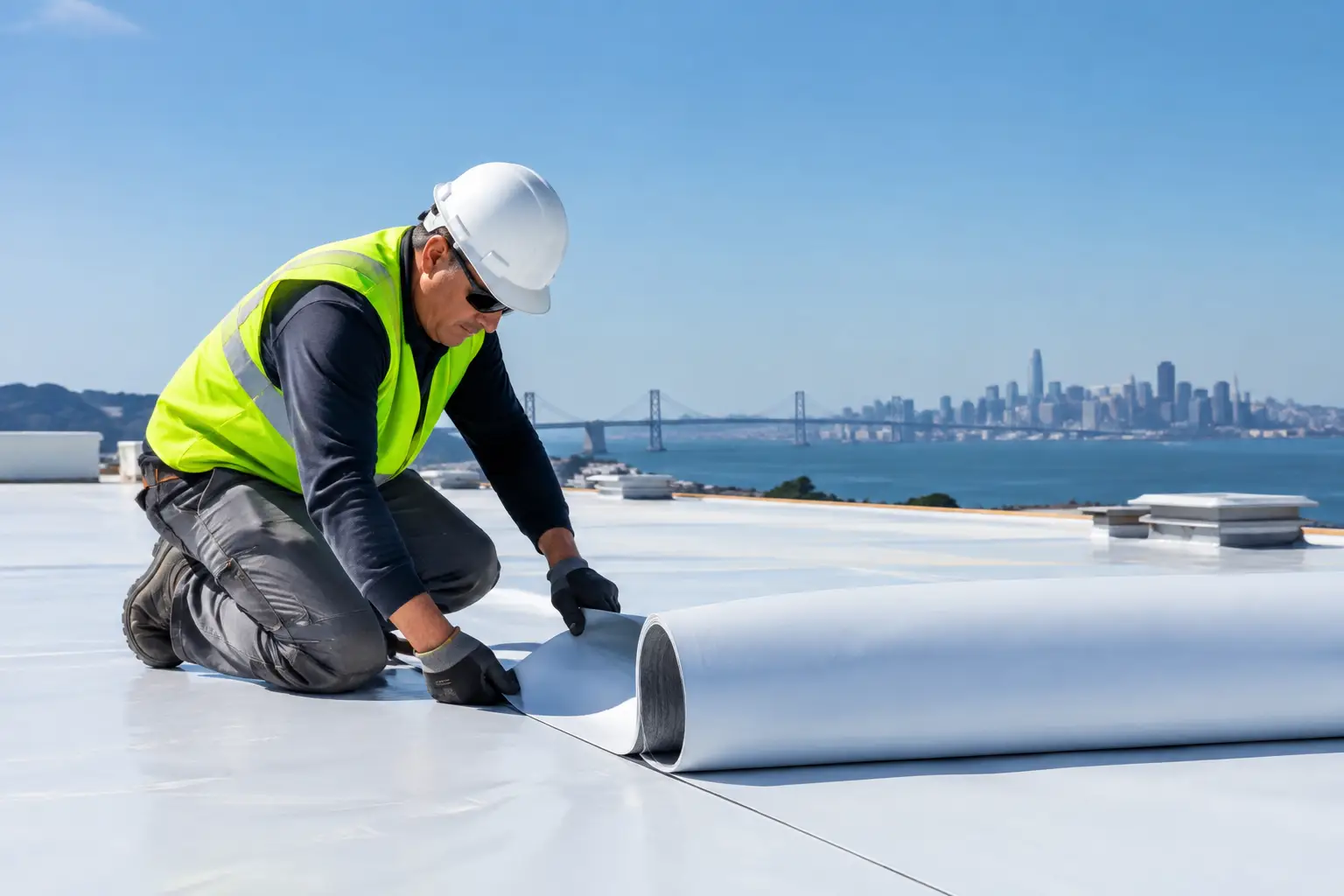
Insulation boards must be installed flat and securely, with slopes designed to direct water toward properly sized drains or scuppers. The membrane must then be laid without tension, attached according to the engineered assembly, and heat-welded with consistent quality control. Flashings around pipes, equipment curbs, walls, and edges require the same level of precision as the main roof field.
At Titanium Roof Innovations, that standard means treating every transition as a critical waterproofing detail, not an afterthought. Clear scope documentation, experienced oversight, and accountable workmanship are essential because a roof is expected to protect the building long after the crew has left.
Cost: Look Beyond the Initial Proposal
TPO is often the more economical option at installation, while PVC may command a higher upfront price due to its formulation and specialized performance characteristics. Yet the lowest proposal is rarely the lowest ownership cost. A flat-roof estimate should identify the membrane thickness, attachment method, insulation package, flashing work, drainage corrections, tear-off requirements, and warranty coverage.
Two proposals can appear similar while specifying very different systems. One may include tapered insulation to eliminate ponding water, reinforced walk pads at service routes, and complete perimeter metal. Another may omit those components and leave the property owner with a lower initial number but a less complete roof assembly.
Ask whether the quoted system is designed for the roof’s condition and use. If the building has chronic ponding water, frequent foot traffic, or rooftop mechanical equipment, those conditions should be addressed directly in the scope. A reliable contractor explains the trade-offs clearly rather than using a generic membrane recommendation for every project.
Maintenance Keeps a Single-Ply Roof Working
TPO and PVC roofs are low-maintenance, not no-maintenance. Seasonal inspections help identify small concerns before they become interior leaks. Debris should be cleared from drains and scuppers, especially after wind events or heavy rain. Rooftop service technicians should use designated walk paths, and any new penetration for equipment, conduit, or solar work should be flashed by a qualified roofing professional.
Property owners should also watch for standing water that remains long after rainfall, loose edge metal, damaged flashing, membrane punctures, or separated sealant at penetrations. These conditions do not automatically mean the entire roof has failed, but they deserve prompt evaluation.
For commercial owners and property managers, a documented maintenance plan can also provide a clearer history of the roof’s condition. That is useful when planning capital expenses, managing tenant concerns, or making an insurance claim after a damaging event.
Which System Is Right for Your Property?
TPO is often the right fit when a property needs a reflective, dependable, cost-conscious single-ply system and the roof will not face significant chemical or grease exposure. PVC may be the stronger choice for restaurants and facilities where exhaust contaminants or chemicals create added risk.
Neither material should be selected by price alone. Roof geometry, drainage, deck condition, insulation needs, wind requirements, and installation quality will have as much influence on service life as the membrane name printed on the roll.
A professional roof assessment should give you a direct answer about what your building needs, what can be repaired, and when replacement is the more responsible investment. The strongest flat roof is the one designed around the property it protects, installed with precision, and maintained before minor vulnerabilities become major disruptions.