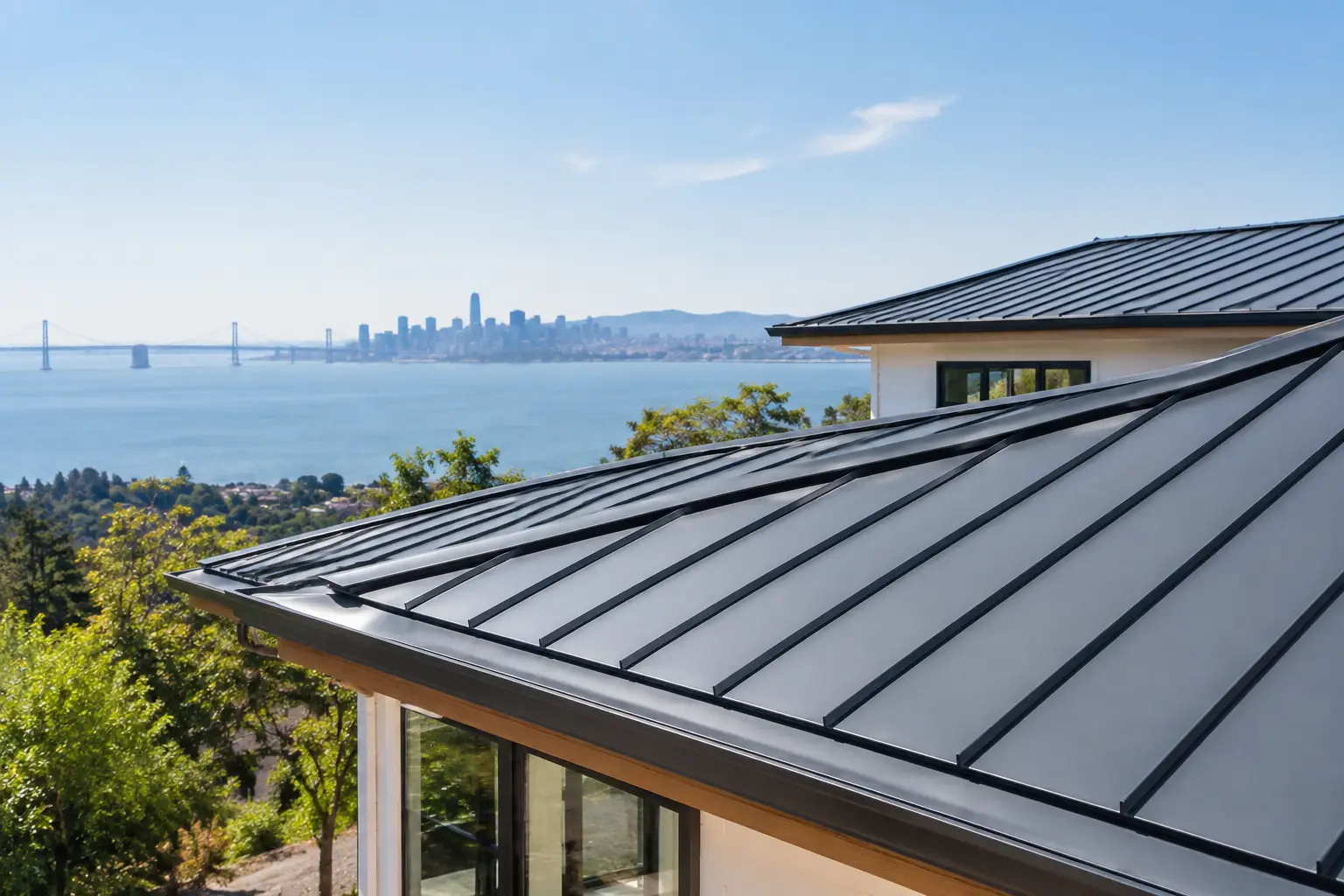

A Bay Area reroofing project is not a cosmetic update. It is a major decision about water protection, structural performance, energy use, and the long-term value of your property. Whether you own a hillside home, a suburban rental, a retail building, or a multifamily property, the right roof must do more than look finished on installation day. It must perform through sun exposure, winter rain, wind-driven moisture, changing temperatures, and years of daily wear.
The strongest reroofing decisions begin before a material is selected. They begin with a clear understanding of the existing roof, the building beneath it, and the level of protection the property requires. A low initial price can become expensive when it leaves out ventilation improvements, flashing replacement, deck repairs, permit requirements, or proper underlayment. The Titanium Standard is built around eliminating those blind spots before work begins.
Start With a Complete Roof Assessment
A roof can fail in ways that are not visible from the driveway. Missing shingles, cracked tiles, ponding water, and deteriorated flashing are obvious warning signs, but hidden moisture and weakened roof decking can be just as consequential. An experienced assessment should look beyond the surface material and evaluate the roof as a complete system.
That means reviewing the condition of the decking, penetrations around vents and pipes, valleys, chimney transitions, skylights, drainage paths, attic ventilation, and gutters. On commercial buildings, the inspection should also account for rooftop equipment, membrane seams, drains, parapet walls, and areas where water collects after rain.
The purpose is not to turn every reroof into a larger project. It is to define the actual scope accurately. Some roofs need a full tear-off because trapped moisture, multiple existing layers, or structural concerns make an overlay unsuitable. Others may qualify for a carefully designed restorative coating system. The right answer depends on the roof’s condition, code requirements, and the performance goals for the building.
Choose the Right System for Your Bay Area Reroofing Project
There is no single best roofing material for every property. Architecture, roof slope, exposure, budget, maintenance expectations, and ownership plans all matter. A premium roofing contractor should explain the trade-offs clearly rather than push one product for every situation.
Shingle roofing for versatile residential protection
Architectural shingles remain a practical choice for many homes because they offer strong weather resistance, broad color selection, and a familiar appearance. Quality shingles can deliver excellent value when installed with high-performance underlayment, proper ventilation, dependable flashing, and manufacturer-approved components.
The important distinction is installation discipline. A shingle roof is only as reliable as its details. Nails placed incorrectly, rushed valley work, exposed fasteners, or reused flashing can shorten the life of an otherwise premium material.
Tile roofing for enduring character
Tile can be an excellent fit for Bay Area homes that call for a refined, long-lasting appearance. Clay and concrete tile systems are valued for durability and curb appeal, but they require careful attention to the underlayment, flashings, attachment method, and roof structure. Tile itself may last for decades, while the waterproofing layers beneath it need professional evaluation and eventual replacement.
A tile reroof is not simply a matter of removing and resetting pieces. Broken tiles, outdated underlayment, inadequate drainage, and improper transitions must be addressed so the finished roof protects as well as it presents.
Metal roofing for long-term performance
Metal roofing is a premium option for owners who prioritize longevity, clean architectural lines, and low-maintenance performance. It can be particularly compelling on homes and commercial properties where durability and energy-conscious design are central priorities. However, metal systems require precise fabrication, compatible components, thoughtful expansion detailing, and experienced installation.
The lowest metal bid is rarely the best value. Small mistakes in panel layout, fastener placement, or flashing integration can undermine a system designed to perform for decades.
Flat and low-slope systems for commercial properties
Commercial reroofing often requires a different approach. TPO single-ply membrane systems can provide efficient, reflective protection for many low-slope roofs. Three-ply torch-down systems offer layered defense in applications where a durable modified-bitumen assembly is appropriate. Silicone roof coatings can restore qualifying roofs while reducing tear-off waste and extending service life.
Each option has a place. A coating is not a shortcut for a roof with saturated insulation, failing seams, or major substrate damage. Likewise, a full replacement may not be necessary when a sound existing roof can be restored with the right preparation and coating system. The decision should follow inspection findings, not assumptions.
Understand What the Estimate Should Include
Transparent estimating is one of the strongest forms of risk protection in roofing. Property owners deserve to know what is included, what may change if concealed damage is found, and who is responsible for each part of the work.
A complete reroofing proposal should identify the roofing system, underlayment, flashing approach, ventilation work, tear-off or overlay plan, disposal, permit responsibility, site protection, and warranty coverage. It should also explain how damaged decking or other hidden conditions will be documented and approved if they are discovered after removal begins.
Be cautious when an estimate is vague about materials or relies on broad phrases such as “as needed” without describing the process. Roofing is a high-consequence trade. Clear scope protects the homeowner or property manager, but it also establishes accountability for the contractor.
Price matters, but it should be evaluated in context. A proposal that includes quality materials, insured labor, careful preparation, full cleanup, and long-term workmanship protection is fundamentally different from one that only promises a new roof covering. The more comparable the scopes are, the more meaningful the price comparison becomes.
Plan for Permits, Weather, and Daily Operations
A professional project plan respects both the building and the people using it. For a residence, that means protecting landscaping, driveways, outdoor furniture, and access points while communicating when noise and debris are expected. For a commercial property, it may require scheduling around tenants, customers, deliveries, sensitive equipment, or business hours.
Permits and local code requirements also deserve early attention. In many cases, reroofing triggers requirements related to materials, ventilation, fire classification, or the number of roof layers that can remain in place. A contractor should manage this process with clarity, not leave the owner guessing about compliance.
Weather planning is equally important. Bay Area conditions can shift quickly, and a roof opening must be protected every day. Responsible crews do not rely on good luck. They stage materials, monitor conditions, secure exposed areas, and maintain orderly work zones from tear-off through final cleanup.
Do Not Overlook Drainage and Insulation
A new roof cannot perform at its best if water is being directed toward vulnerable areas or if attic heat is shortening material life. Gutters, downspouts, ventilation, and insulation are often treated as separate concerns, yet they affect the roofing system directly.
Clogged or undersized gutters can cause water to back up along roof edges and damage fascia. Poor attic ventilation can create excessive heat buildup and moisture concerns. Insufficient insulation can make indoor comfort harder to maintain while increasing energy costs. Addressing these connected systems during reroofing is often more efficient than returning later to correct an avoidable problem.
For flat roofs, drainage deserves particular scrutiny. Standing water may signal inadequate slope, blocked drains, or deterioration around scuppers and penetrations. A new membrane installed over unresolved drainage problems is not a complete solution.
Protect Your Investment After Installation
Even a premium roof benefits from periodic attention. Annual inspections, gutter cleaning, prompt repair of storm damage, and careful review after nearby tree work can prevent small issues from becoming costly interior damage. Commercial roofs should have a documented maintenance plan, especially when rooftop traffic or mechanical equipment is involved.
Keep copies of the contract, warranty information, permits, material records, and photos from the completed project. These documents help support future maintenance decisions, insurance claims, and property transactions. They also provide a clear record that the roof was installed with professional oversight.
Titanium Roof Innovations approaches reroofing with founder-led craftsmanship, transparent communication, and a commitment to long-term protection. For owners weighing a roofing decision, the standard should be simple: choose a system and installation team prepared to protect your most valuable asset long after the last crew leaves the property.