
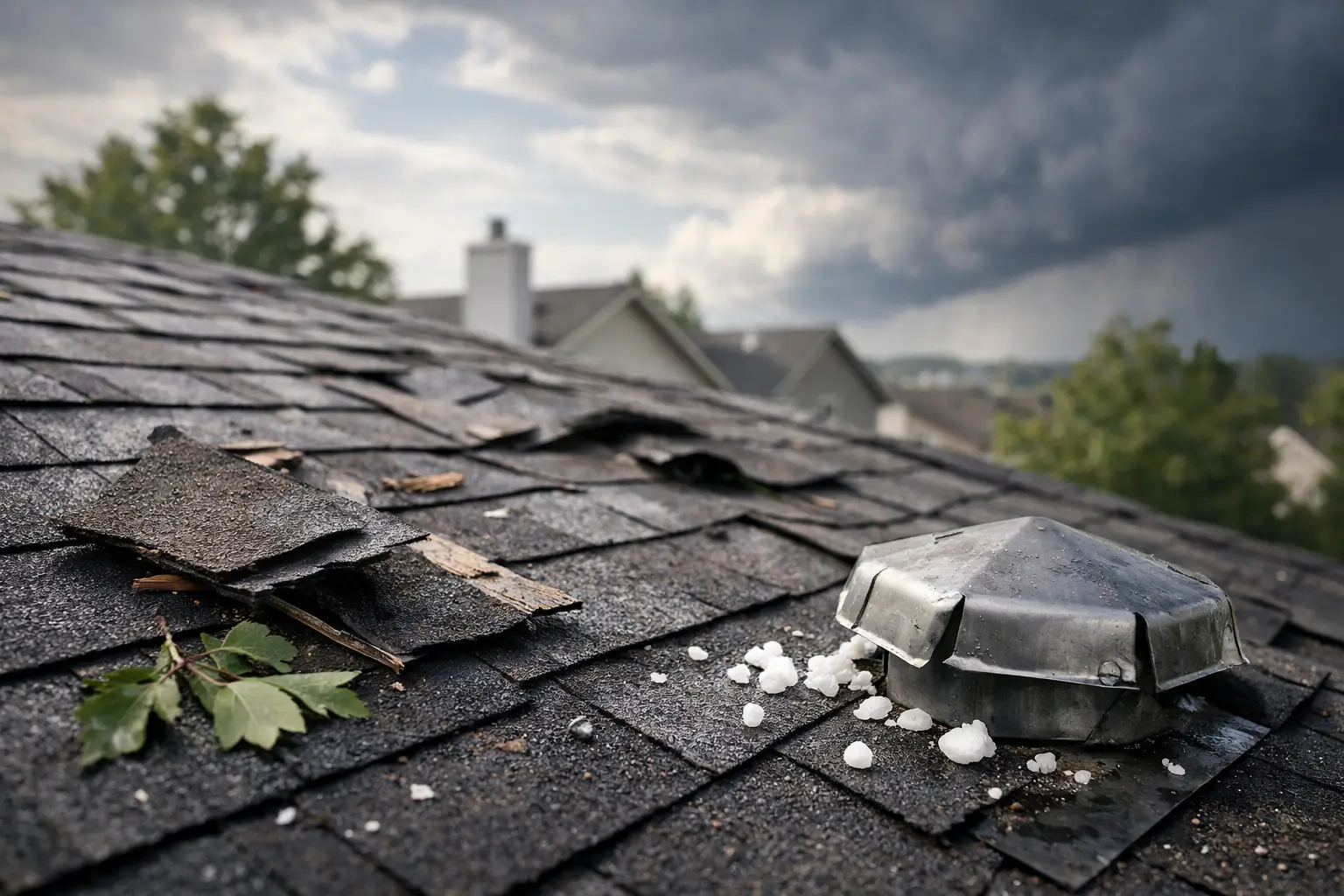
A roof can look intact from the driveway and still have damage that allows water, wind, and debris to compromise the system beneath it. Knowing the signs of storm roof damage helps property owners act before a small exposure becomes a ceiling leak, mold concern, or costly structural repair. After strong wind, heavy rain, or falling branches, a careful assessment protects one of your property’s most valuable assets.
1. Missing, Lifted, or Creased Shingles
Wind does not always tear shingles completely off. It can lift their edges, break the seal that holds them down, or crease them near the fastening line. A creased shingle may settle back into place and look acceptable at first glance, but its ability to shed water has been reduced.
Look for bare patches, uneven shingle lines, exposed nail heads, or tabs that appear bent upward. Also check the ground around the home for shingle pieces. On architectural shingle roofs, wind damage can be subtle, so a professional inspection is often the safest way to determine whether the roof’s weather barrier has been affected.
2. Granules in Gutters or at Downspouts
Asphalt shingles have a protective layer of mineral granules that shields the asphalt from ultraviolet exposure and helps manage water flow. A few loose granules are normal, particularly on a newer roof. A concentrated amount after a storm is different.
Check gutters, downspout exits, and paved areas below roof valleys for dark, sand-like material. Heavy granule loss can leave shingles vulnerable to faster deterioration. It may also signal impact damage from wind-driven debris or hail, even when individual shingles have not visibly cracked.
Granule loss should be evaluated in context. An older roof may be nearing the end of its service life, while a newer roof with sudden, localized loss may have sustained storm-related damage. The distinction matters when planning repairs and documenting conditions for an insurance claim.
3. Damaged Flashing Around Roof Openings
Flashing is the metal or membrane material installed around chimneys, skylights, vents, wall transitions, and other roof penetrations. It is one of the most critical defenses against leaks, and it is frequently affected by wind, falling limbs, and debris.
Bent, loose, rusted, or separated flashing deserves prompt attention. So do cracked sealant lines around pipe boots and vent bases. Water often enters at these transitions before it appears anywhere else, then travels along decking or framing until it reaches a visible location indoors.
A stain on the ceiling does not always sit directly below the roof opening that caused it. This is why surface patching without tracing the source can lead to repeat leaks.
4. Dented Gutters, Downspouts, and Roof Metal
Gutters are not merely an exterior detail. They direct water away from the roof edge, fascia, siding, and foundation. After a storm, inspect them for dents, sagging sections, loose fasteners, separated seams, or sections pulling away from the structure.
Damage to gutters can also point to a larger roofing issue. Dents in metal gutters, vent caps, or flashing may indicate that the roof was struck by debris or hail. On metal roofing systems, look for displaced panels, damaged seams, and loosened fasteners. Even a small opening at a panel connection can allow water below the surface.
5. Tree Limbs, Debris, or Abrasion on the Roof
A branch does not have to puncture a roof to cause trouble. Limbs can scrape away shingle granules, crack tile, damage coatings, or shift roof components during high winds. Leaves and debris can also collect in valleys and behind chimneys, slowing drainage and holding moisture against the roof surface.
Never climb onto a wet or potentially damaged roof to remove debris. Roof slopes, wet surfaces, and hidden weakened areas create a serious fall risk. If a large limb is resting on the roof, keep people clear of the area and arrange for a qualified roofing professional to assess it after the immediate hazard is addressed.
6. Cracked, Slipped, or Broken Tile
Tile roofs offer exceptional longevity, but individual tiles can crack under impact or shift during severe weather. A broken tile may expose the underlayment below, which is the layer that provides critical water protection beneath the visible roof surface.
From the ground, watch for irregular tile lines, missing pieces, fresh fragments in landscaping, or tiles that appear raised. Do not walk on tile roofing unless you have the proper experience and equipment. Tiles can break under foot, creating more damage and putting the person on the roof at risk.
With tile systems, a precise repair is often possible when damage is limited. However, the surrounding underlayment, flashings, and attachment points should be inspected as part of the same evaluation.
7. Water Stains, Drips, or Musty Odors Indoors
Interior symptoms are among the clearest signs that storm damage has moved beyond the roof surface. Look in upper-floor rooms, closets, around skylights, and near exterior walls for yellow-brown ceiling stains, bubbling paint, damp drywall, or active drips.
Attics can reveal problems earlier. If it is safe to enter, use a flashlight to look for wet insulation, darkened roof decking, water trails, or daylight showing through the roof structure. Avoid touching electrical fixtures or wiring near moisture.
Musty odors also deserve attention. Water can become trapped in insulation or framing before a visible stain develops. The longer moisture remains concealed, the greater the risk of mold growth and material deterioration.
8. Soft Spots, Sagging, or Changes in Roof Shape
A roofline should look straight, consistent, and properly supported. Any new dip, sag, soft area, or uneven plane is a priority concern, especially after prolonged rain or a tree impact. These conditions can indicate saturated decking, damaged framing, or water intrusion that has weakened the materials below the roof covering.
Do not assume a sagging area can wait until the next maintenance cycle. Keep occupants away from the affected space where practical and schedule an immediate professional assessment. Structural concerns require a more thorough response than replacing a few surface shingles.
9. Leaks on Flat Roofs and Around Drains
Commercial buildings and modern homes with low-slope roofs require a different visual check. TPO membranes, torch-down systems, and silicone-coated roofs are designed to manage water across broad, low-pitch surfaces. Storm damage may show up as punctures, lifted seams, damaged edge metal, blocked drains, or standing water that remains well after rain has stopped.
Ponding water is not always an emergency, but it should not be ignored. The appropriate repair depends on the roofing system, drainage design, age of the membrane, and condition of seams and penetrations. A quick coating or patch may not solve an underlying slope, substrate, or drainage problem.
What to Do After You Notice Storm Damage
Start by documenting visible conditions from the ground. Take clear photos of fallen branches, damaged gutters, displaced roofing materials, interior stains, and any areas where water is entering. Note the date of the storm and when you first noticed the issue. This documentation can be useful if an insurance claim becomes necessary.
Next, take reasonable steps to limit further damage without putting yourself at risk. Move belongings away from drips, use containers to catch water, and avoid opening or disturbing damaged roofing materials. Temporary protection may be appropriate for an active leak, but it should be installed correctly so it does not create additional wind or water exposure.
Then arrange for a professional roof inspection. A qualified contractor can determine whether the issue is isolated, whether hidden components are affected, and whether repair or replacement is the responsible long-term solution. For Bay Area property owners, that assessment should account for the roof type, local wind exposure, drainage, age, and any previous repairs.
Titanium Roof Innovations approaches storm assessments with the same standard applied to every roofing project: clear findings, transparent recommendations, and workmanship built to protect the property for the long term.
Storm damage is easier to manage when it is addressed early. A prompt inspection after severe weather gives you a clear picture of your roof’s condition and the confidence to make the right next decision before the next rainfall tests an already compromised system.