
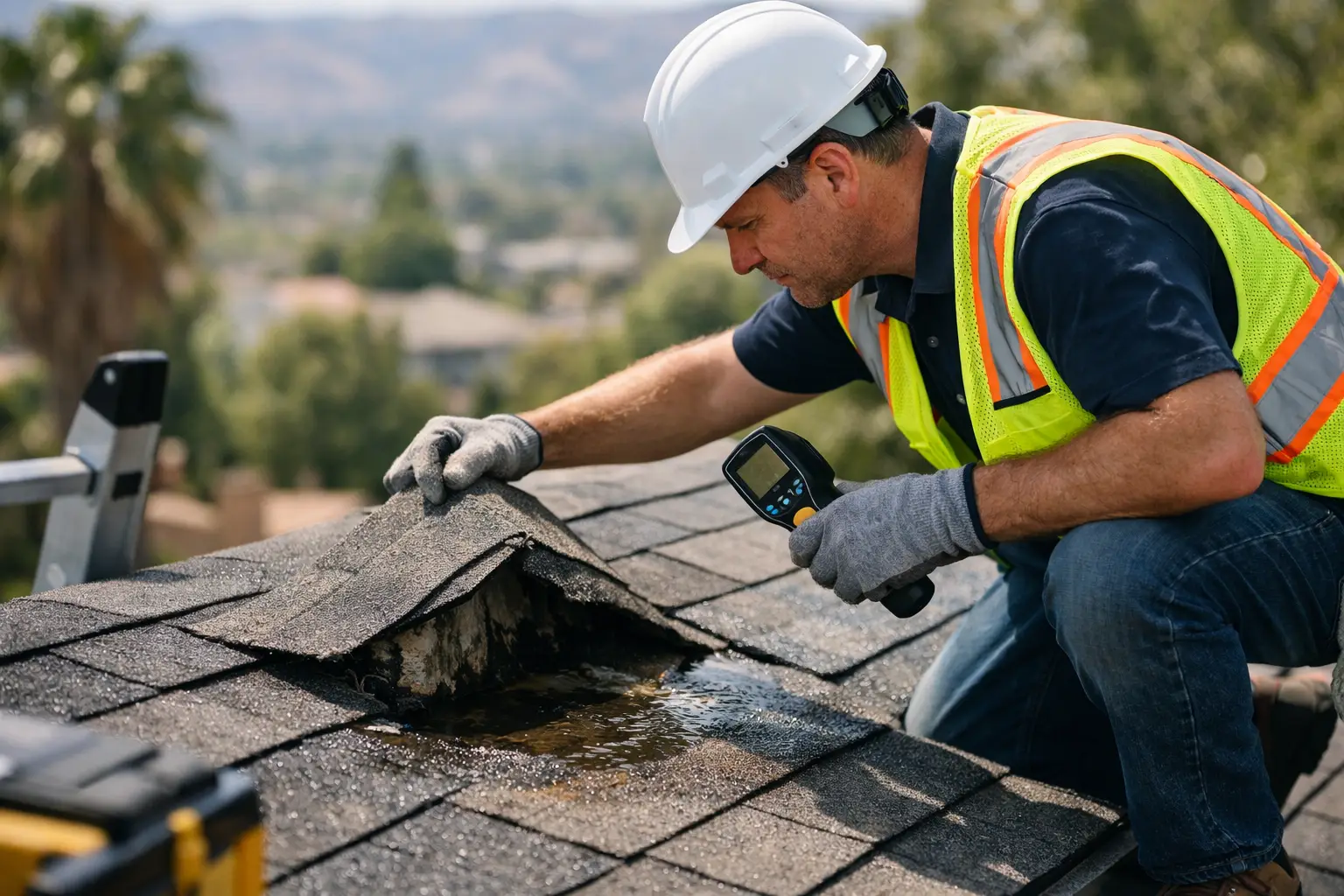
A water spot on a ceiling is rarely where a roof leak begins. Water can travel along roof decking, rafters, insulation, wiring, and wall framing before it becomes visible indoors. A professional San Jose roof leak inspection is designed to trace that path, identify the actual point of failure, and determine whether a focused repair will protect the property or whether a broader roofing issue needs attention.
For Bay Area property owners, speed matters, but accuracy matters more. Sealing the visible symptom without finding the source can trap moisture where it continues to damage wood, insulation, and interior finishes. The right inspection creates a clear scope of work based on evidence, not guesses.
Why Roof Leak Sources Are Often Misdiagnosed
Roofs are layered systems. Shingles, tile, metal panels, underlayment, flashing, vents, valleys, gutters, and roof penetrations must work together to move water away from the structure. A failure in one detail can show up several feet away from the actual opening.
For example, a stain near a skylight may be caused by deteriorated skylight flashing, but it could also result from cracked tile uphill, failed underlayment, an improperly sealed valley, or backed-up water from a drainage issue. On a low-slope commercial roof, ponding water may expose weaknesses around seams or penetrations, while a leak near the parapet could originate at a cap flashing detail.
This is why a serious inspection does not begin and end with the ceiling stain. It evaluates the roof from the outside in, follows the probable water path, and documents the condition of the surrounding system. That disciplined process reduces the risk of repeat repairs and surprise costs later.
What a San Jose Roof Leak Inspection Should Include
A thorough San Jose roof leak inspection should begin with a conversation about what the owner has observed. The timing of the leak, the direction of wind during rain, whether the issue appears only in heavy storms, and whether repairs have been attempted before all provide useful clues.
The exterior assessment then examines the roofing material and the details most likely to admit water. On a sloped roof, this includes field shingles or tile, ridges, hips, valleys, roof-to-wall transitions, pipe boots, chimneys, skylights, vents, and flashing. On flat and low-slope systems, the inspection should focus on membrane seams, drains, scuppers, penetrations, edge metal, flashing terminations, blisters, cracks, and areas where water collects.
The inspector should also look beyond the roof surface. Gutters, downspouts, and drainage paths affect how water behaves at the roof edge. Clogged gutters can force water beneath shingles or behind fascia boards. Damaged gutter connections can saturate siding and framing, creating symptoms that look like a roof leak but require a different repair.
Inside the property, accessible attic areas, ceilings, and wall surfaces may reveal moisture trails, darkened decking, mold-like staining, damp insulation, rusted fasteners, or ventilation concerns. An attic inspection is especially valuable because it can expose a slow leak before it reaches finished living space.
The outcome should be clear: what is leaking, why it is leaking, what repair is recommended, and whether the surrounding roof condition supports a targeted repair. Property owners deserve an explanation in plain language, supported by a transparent estimate rather than vague recommendations.
Common Leak Points on Bay Area Roofs
A roof does not have to be old to leak. Installation quality, weather exposure, maintenance history, and material compatibility all play a role. In San Jose and surrounding areas, seasonal rain can reveal weaknesses that remained hidden through dry months.
Flashing failures are among the most common causes. Flashing protects transitions where roofing meets a vertical surface or a penetration interrupts the roof plane. If it is corroded, lifted, poorly integrated with the roofing material, or sealed only with aging caulk, water has a direct route beneath the roof covering.
Pipe boots are another frequent issue. Rubber or neoprene collars around plumbing vents can crack from sun exposure. Tile roofs often require careful attention because individual tiles may break or shift while the more critical waterproofing layer underneath deteriorates over time. Replacing a visible tile may improve appearance, but it will not solve a leak caused by compromised underlayment.
On flat roofs, the problem may be a split seam, puncture, failed patch, deteriorated coating, or improper drainage. TPO membrane systems, torch-down roofing, and silicone restoration coatings each have different inspection requirements. Material-specific knowledge matters because the wrong repair method can compromise the system or shorten its service life.
When a Repair Is Enough and When It Is Not
The most responsible recommendation is not automatically a full roof replacement. If the roofing system is otherwise sound and the leak is isolated to a damaged flashing, pipe boot, seam, or small area of material failure, a properly executed repair may offer excellent value and long-term protection.
However, repeated leaks, widespread granule loss, brittle shingles, failing underlayment, extensive membrane deterioration, or water damage across multiple roof areas may indicate that repairs are only delaying a larger problem. The decision depends on the roof’s age, remaining service life, material type, prior repair history, and the extent of hidden moisture damage.
For commercial property owners, the calculation also includes operational risk. A small leak above inventory, electrical equipment, tenant space, or critical operations can create costs far beyond the roof repair itself. In those cases, a more comprehensive solution may be the prudent investment even if a temporary patch is technically possible.
A quality contractor explains these trade-offs directly. The goal is to protect the asset, not to sell unnecessary work or apply a quick fix that will fail during the next storm.
Signs You Should Schedule an Inspection Now
Do not wait for active dripping water to take roof concerns seriously. A leak often begins as a small breach and becomes more expensive as moisture spreads. Schedule an assessment if you notice any of the following:
- Brown ceiling stains, peeling paint, bubbling drywall, or a musty odor indoors.
- Missing, cracked, curled, or displaced shingles or tiles after wind or heavy rain.
- Granules collecting in gutters, cracked pipe boots, loose flashing, or visible gaps around penetrations.
- Standing water on a flat roof more than 48 hours after rainfall.
- Gutter overflow, rotted fascia, or water running behind gutters rather than through downspouts.
- A roof that has needed multiple repairs in recent years or is nearing the end of its expected service life.
These symptoms do not all mean replacement is required. They do mean the roof should be evaluated before a manageable repair becomes structural restoration work.
What to Do Before the Inspector Arrives
If water is entering the building, protect people and interiors first. Move valuables away from the affected area, place a container beneath active drips, and photograph visible staining or damage. If a ceiling is bulging with trapped water, keep people away from that area and seek professional guidance promptly. A saturated ceiling can fail without much warning.
Avoid climbing onto a wet roof or applying roof cement at random. Walking on wet shingles, tile, or low-slope membranes is dangerous and can cause additional damage. Interior observations are useful, but a safe exterior evaluation should be handled by trained professionals with the right equipment and material knowledge.
It also helps to gather any records of prior roof repairs, installation dates, warranties, and insurance correspondence. This information can help distinguish a new failure from a recurring issue and support a more accurate repair recommendation.
Choose Accountability, Not a Surface-Level Patch
A roof leak inspection should leave you with confidence, not uncertainty. Look for a contractor that can inspect residential and commercial systems, explain the findings without pressure, provide a written scope, and stand behind the workmanship. Liability insurance, clear contract terms, and strong warranty practices are meaningful protections when work affects your property envelope.
Titanium Roof Innovations approaches leak investigations with the same standard applied to roof replacements and restoration work: identify the real failure, specify the right solution, and perform the work with precision. That is how a repair becomes dependable protection instead of a temporary patch.
The first stain may be small, but the condition behind it deserves a careful answer. Address it while the repair options are still on your terms.