A torch down roof can look solid from the ground and still be closer to failure than most owners realize. On flat and low-slope buildings, surface wear does not always announce itself early. By the time water shows up inside, the roofing system may have been losing performance for years. That is why understanding torch down roof lifespan matters before you are forced into an urgent repair or replacement decision.
Torch down roofing remains a proven option for low-slope residential and commercial properties because it is durable, weather-resistant, and cost-effective when installed correctly. But no roof system has a fixed expiration date. Some torch down roofs fail early because of poor workmanship, trapped moisture, or neglected drainage. Others keep protecting a building well past expectations because the installation was precise and the maintenance stayed consistent.
How long is torch down roof lifespan?
In most cases, torch down roof lifespan falls between 15 and 25 years. A well-installed 3-ply system on a properly prepared deck can sometimes perform longer, especially when the roof receives routine inspections and timely repairs. A thinner or lower-quality installation may land closer to the low end of that range.
That spread matters. Two buildings with the same square footage can have very different outcomes depending on how the roof was designed, installed, and maintained. Material quality counts, but workmanship is often the deciding factor. If seams are not fully bonded, flashing details are weak, or drainage is ignored, lifespan drops fast.
Climate also plays a role. In the Bay Area, torch down systems do not usually face the freeze-thaw punishment seen in colder regions, but they do deal with intense UV exposure, seasonal rain, wind-driven debris, and temperature swings that gradually stress the membrane. Those conditions do not make torch down a poor choice. They simply mean details and upkeep matter.
What affects torch down roof lifespan the most?
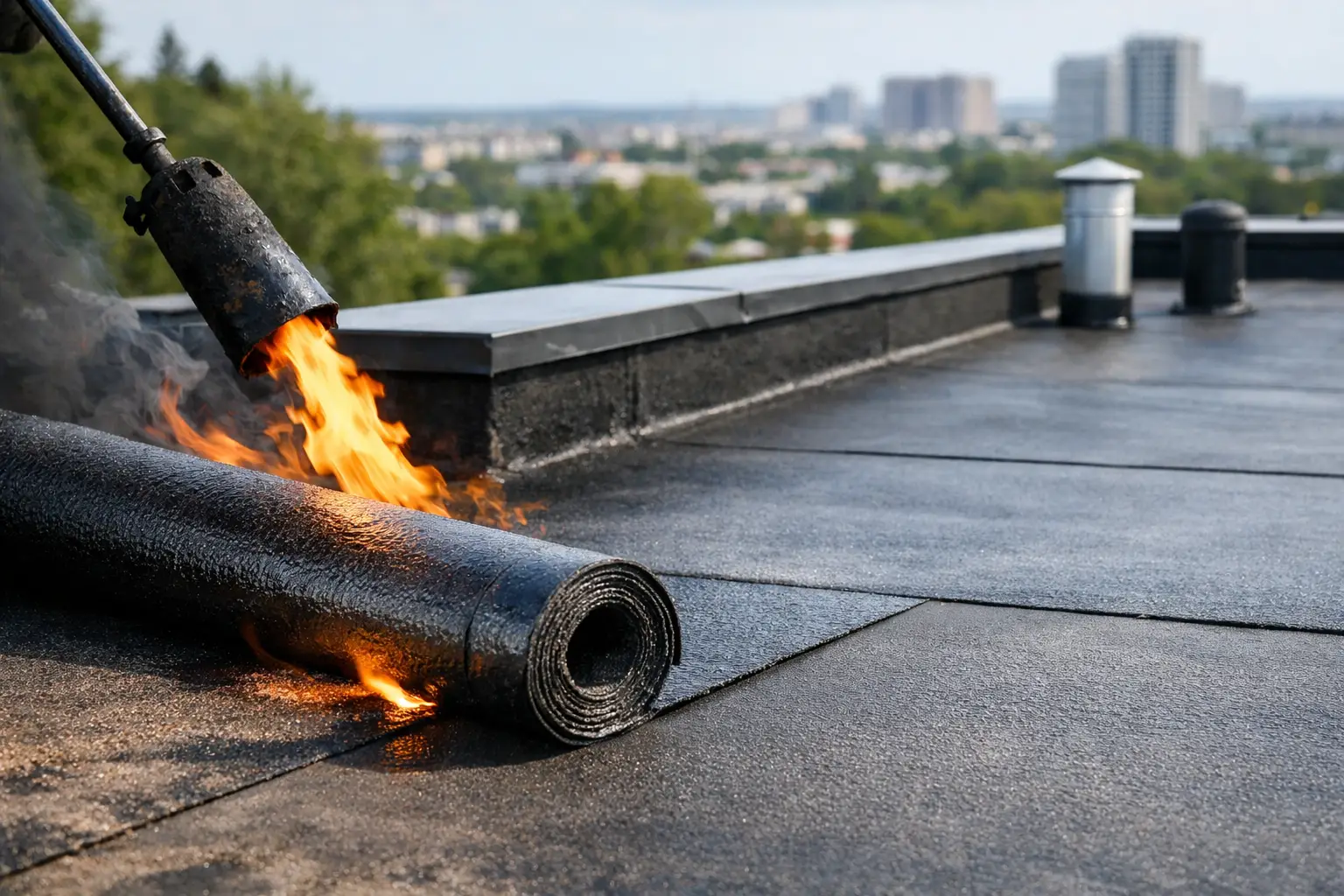
The biggest factor is installation quality. Torch down roofing is not forgiving work. The membrane must be heated and adhered with precision, and every lap, edge, and penetration has to be sealed correctly. If the installer rushes the process or cuts corners on prep work, the roof may look complete while hidden weak points are already in place.
System design comes next. A 3-ply torch down roof generally offers more durability and puncture resistance than a lighter system. Better reinforcement means better performance under foot traffic, ponding pressure, and daily expansion and contraction. For owners who want long-term protection rather than the lowest upfront number, that upgrade often makes financial sense.
Drainage has an outsized impact. Flat roofs are rarely truly flat, but if water sits too long after rain, the membrane stays under constant stress. Ponding water can accelerate surface wear, expose flashing problems, and increase the chance of leaks at seams and penetrations. Even a strong roof system loses years when drainage is poor.
Foot traffic is another issue owners underestimate. Service technicians crossing the roof for HVAC work can scuff granules, stress seams, or puncture vulnerable areas. Torch down membranes are durable, but they are not immune to repeated abuse. If a roof serves multiple trades, protective walk pads and clear access paths become part of preserving lifespan.
Then there is maintenance. Small failures rarely stay small on low-slope roofing. A lifted seam, cracked flashing boot, or clogged drain can shorten the life of the entire assembly if it is left alone through a wet season.
Signs your torch down roof is aging faster than it should
A roof does not need an active leak to be in trouble. One of the most common signs of decline is surface blistering. Blisters may indicate trapped moisture or poor adhesion, and while not every blister is an emergency, they should be evaluated before they split or worsen.
Open laps or seam separation are more serious. Torch down systems depend on strong bonded seams. Once seams begin to fail, water has a direct path beneath the membrane, where damage can spread beyond what is visible from the top.
Exposed or damaged flashing is another warning sign, especially around vents, parapet walls, skylights, and roof edges. These transition points often fail before the field membrane does. If you see cracking, lifting, or obvious wear at details, the roof may be entering a more vulnerable stage.
Interior signs matter too. Ceiling stains, musty odors, bubbling paint, and unexplained moisture near perimeter walls can all point to a roof problem that started earlier than expected. By the time interior symptoms show up, the roof may need more than a patch.
Can maintenance extend the life of a torch down roof?
Yes, and often by several years. Maintenance does not make an aging membrane new again, but it does help prevent localized issues from becoming system-wide failures. The owners who get the best return from torch down roofing usually treat inspections as part of asset protection, not an optional expense.
A professional roof inspection at least once a year, and after major storms, is a smart baseline. During that visit, a contractor should check seams, flashing, drainage points, penetrations, granule wear, and any signs of movement or trapped moisture. Catching these issues early is cheaper than waiting for water intrusion.
Cleaning matters too. Debris buildup can block drains, trap moisture, and accelerate deterioration. Leaves, branches, and rooftop dirt may not look severe, but they change how water moves across the roof. Keeping drains and scuppers clear is one of the simplest ways to protect lifespan.
Repairs should also be handled promptly and correctly. A rushed patch over a wet or compromised area can create a false sense of security. Proper repair work means identifying the source of the problem, evaluating the surrounding membrane, and restoring the detail in a way that matches the roof system.
When repair makes sense and when replacement is smarter
Not every aging torch down roof needs to be replaced immediately. If the problem is isolated and the rest of the system remains dry and structurally sound, targeted repair may be the right call. That is especially true when the roof still has meaningful service life left.
Replacement becomes more practical when failures are widespread, moisture is trapped in multiple areas, repairs keep stacking up, or the membrane has reached the end of its expected performance window. At that stage, continuing to patch the roof can cost more in the long run than replacing it with a properly built system.
This is where an honest assessment matters. Property owners do not need guesswork or pressure. They need a clear understanding of current roof condition, remaining service life, and the financial trade-off between repair and replacement. That kind of transparency protects budgets as much as buildings.
How to get the longest performance from a torch down roof
Start with the right contractor. Torch down roofing is a specialty system, and the difference between average work and disciplined work can mean years of additional service life. Ask about system buildup, substrate preparation, flashing methods, ventilation where relevant, and how quality control is handled during installation.
Choose materials with long-term performance in mind, not just immediate cost. Premium membranes and properly designed multi-ply assemblies typically offer better resilience. If your building has frequent roof access, unusual drainage challenges, or exposure to harsh sun, those conditions should shape the specification.
After installation, stay proactive. Keep records of inspections and repairs. Limit unnecessary foot traffic. Address drainage issues quickly. If you own property in areas like San Jose, where long dry stretches can hide roof problems until winter rain arrives, pre-season inspections are especially valuable.
At Titanium Roof Innovations, that long-view approach is part of the standard. A roof should not just pass inspection on install day. It should be built and maintained to protect your asset for the years that follow.
The real answer to lifespan is not just years
Owners often ask for one number, but torch down roof lifespan is really a measure of condition, not just age. A 12-year-old roof that was installed with precision and maintained consistently may be a better bet than an 8-year-old roof with chronic ponding and poor repair history.
The better question is this: how well is the system performing right now, and what will it take to keep it reliable? When you frame it that way, decisions become clearer. You stop chasing the cheapest short-term fix and start protecting the structure, the interior, and the budget behind it.
If your torch down roof is aging, leaking, or simply overdue for a professional assessment, now is the right time to find out where it stands. A measured inspection today can prevent a much more expensive surprise later.