A commercial roof does not get many second chances. Once leaks start affecting tenants, inventory, equipment, or daily operations, the cost of waiting rises fast. That is why a tpo roofing system for commercial buildings has become a serious option for owners and property managers who want cleaner performance, lower maintenance demands, and a membrane built for long-term protection.
TPO, or thermoplastic polyolefin, is a single-ply roofing membrane designed primarily for flat and low-slope roofs. It is widely used on office buildings, retail centers, warehouses, multifamily properties, and light industrial facilities because it balances energy efficiency, weather resistance, and installation speed better than many older commercial roofing systems. But as with any roofing decision, the right fit depends on the building, the budget, and the quality of the installation.
Why a TPO roofing system for commercial buildings gets attention
Commercial owners are usually balancing three pressures at once: cost control, asset protection, and disruption to operations. TPO stands out because it addresses all three in a practical way.
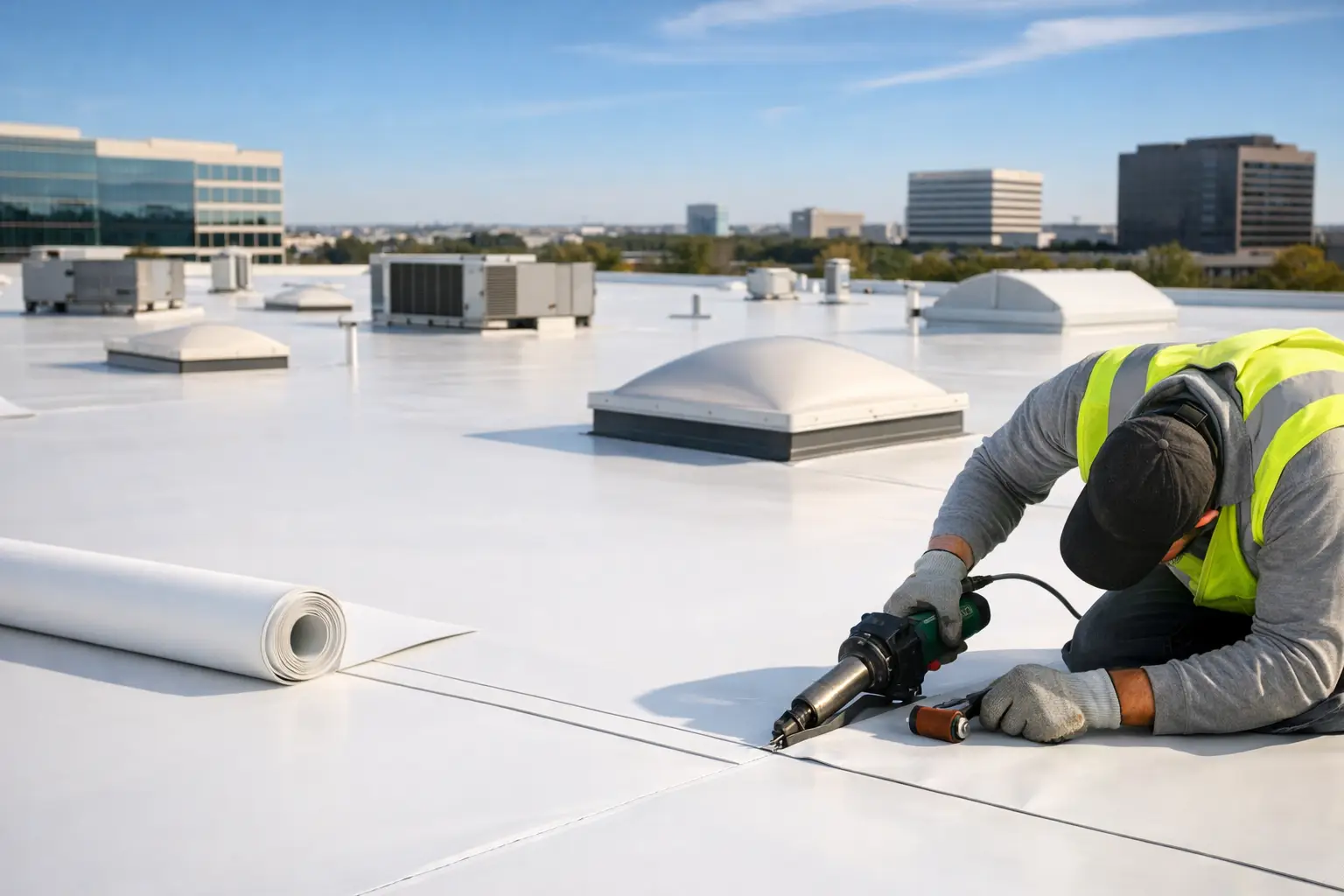
The membrane is heat-welded at the seams, which creates a strong bond that helps resist water intrusion when installed correctly. That matters on large roof surfaces where seam failure can become the weak point of the entire system. TPO is also available in highly reflective colors, especially white, which can reduce rooftop heat absorption and help lower cooling demand in warm climates.
For many Bay Area properties, that reflectivity is not just a comfort feature. It can support better building performance during hot stretches and help reduce stress on HVAC systems. On buildings with aging insulation or heavy sun exposure, roof surface temperature can make a noticeable difference.
TPO also tends to be lighter than some multi-layer commercial systems. That can simplify certain reroof projects, though structural review still matters. A lighter membrane does not remove the need for proper substrate evaluation, drainage planning, or code compliance.
What a TPO system actually includes
A TPO roof is more than the top membrane. The full system usually includes the roof deck, insulation, cover board when specified, attachment method, flashing details, and drainage components. If one part is weak, the whole assembly can suffer.
Insulation deserves special attention. On a commercial project, insulation affects thermal performance, slope correction, and moisture resistance. In many cases, tapered insulation is used to direct water toward drains and reduce ponding. That is a critical detail because even a durable membrane will underperform if water sits on the roof for extended periods.
Attachment methods also vary. A TPO system can be mechanically attached, fully adhered, or in some cases ballasted, though ballast is less common on many newer projects. Each approach has cost and performance implications. Mechanically attached systems may install faster and at a lower price point, while fully adhered systems can offer a cleaner appearance and different wind performance characteristics.
Where TPO performs well
TPO is often a strong choice for buildings with large, open roof areas and straightforward penetrations. Retail buildings, distribution spaces, medical offices, and apartment complexes often fit that profile. When the roof layout is relatively clean and drainage is well designed, TPO can deliver excellent long-term value.
It also performs well for owners who want a modern, energy-conscious roofing system without moving into a much higher cost category. That balance is a big reason it remains popular. You are not just paying for the membrane itself. You are investing in reduced leak risk, better reflectivity, and a system that is easier to inspect and maintain than many aging built-up roofs.
Another advantage is repairability. If damage occurs at a localized area, trained commercial roof professionals can often address seams, flashing points, or punctures without replacing the entire roof. That does not mean repairs should be improvised. Single-ply systems demand precise techniques, especially around penetrations and edge details.
The trade-offs owners should understand
No commercial roofing system is perfect for every building, and TPO is no exception. A premium contractor should be direct about that.
First, product quality matters. Not all TPO membranes perform the same over time. Thickness, formulation, reinforcement, and manufacturer standards all affect durability. Choosing based on lowest bid alone can lead to a roof that looks competitive on paper and underperforms in the field.
Second, workmanship matters just as much as material. Heat-welded seams are a strength, but only when they are executed properly. Poor seam welding, rushed flashing work, weak edge securement, or bad drainage design can shorten the life of the roof. On commercial properties, small installation errors can turn into expensive interior damage.
Third, TPO can be vulnerable to puncture if the roof sees frequent foot traffic or houses a lot of service equipment. Restaurants, facilities with regular HVAC servicing, and properties with multiple rooftop trades may need added protection such as walkway pads or more durable assemblies in high-traffic zones.
Chemical exposure is another consideration. Certain manufacturing environments or buildings with grease exhaust may require closer review because contaminants can affect membrane performance. In those cases, another roofing system may be a better fit, or the TPO assembly may need additional protective planning.
How TPO compares to other flat roofing options
If you are comparing systems for a commercial property, the real question is not whether TPO is good. The question is whether it is the best match for your building’s risk profile and operating needs.
Compared with older built-up or modified bitumen systems, TPO is generally cleaner, lighter, and more reflective. It can also install more efficiently, which may reduce disruption during replacement. Compared with PVC, TPO is often more budget-friendly, though PVC may be preferable in some environments with chemical exposure. Compared with EPDM, TPO usually offers better reflectivity, while EPDM may still appeal in certain climates or project conditions.
This is where disciplined estimating matters. A proper recommendation should consider roof geometry, insulation goals, existing moisture issues, mechanical traffic, code requirements, and how long the owner plans to hold the property. The best roofing decision is rarely made from a material sample alone.
What to look for in a commercial TPO installation
A strong proposal should go beyond square footage and price. It should explain how the roof assembly will protect the building.
Look for clear language around tear-off versus overlay, insulation thickness, taper package if needed, flashing details, seam welding procedures, edge metal, penetrations, and warranty coverage. A serious contractor should also address how the crew will protect the site, manage safety, and minimize interruption to tenants or operations.
On commercial projects, accountability is a major part of quality. You want clear communication, documented scope, and leadership that stays involved from inspection through final completion. That is especially true when the roof protects revenue-generating space. Delays, change-order surprises, and vague specifications are warning signs.
For owners in places like San Jose and the broader Bay Area, local climate conditions also matter. A roof may not face the freeze-thaw extremes seen in other regions, but UV exposure, heat, seasonal rain, and aging drainage components still create real wear. A TPO system should be designed around those realities, not sold as a one-size-fits-all solution.
How long a TPO roof can last
A professionally installed TPO commercial roof can often perform for 20 years or longer, depending on membrane thickness, maintenance, rooftop traffic, weather exposure, and installation quality. Some systems last beyond that. Some fail much sooner because corners were cut at the start.
That is why long-term value depends on more than product selection. Routine inspections, prompt repairs, clean drainage, and careful management of rooftop access all affect lifespan. A neglected roof, even a high-quality one, will age faster than it should.
The owners who get the best return are usually the ones who treat the roof as a building asset, not a line item to revisit after the next leak. That means choosing a contractor with the technical discipline to build the system correctly and the transparency to explain where your money is going.
At Titanium Roof Innovations, that is the standard: uncompromising quality, precise installation, and roofing systems built to protect your most valuable asset for the long haul.
If your commercial roof is nearing the end of its service life, the smartest next step is not guessing between materials. It is getting a clear evaluation of the building, the drainage, the insulation, and the risk points so the next roof does exactly what it should – protect the property, control long-term costs, and let you run the building with confidence.