A roof rarely fails all at once. More often, it gives you a series of warnings – some obvious, some easy to miss until the damage spreads into insulation, framing, drywall, and interior finishes. If you’re wondering how to know if roof needs replacement, the right answer is not based on one stain on the ceiling or one missing shingle. It comes down to the roof’s age, the extent of wear, how widespread the damage is, and whether repairs still make financial sense.
For Bay Area property owners, that decision matters more than most people realize. A roof is not just a weather barrier. It protects structural integrity, supports energy performance, preserves curb appeal, and reduces the risk of expensive surprises during a storm, a home sale, or an insurance claim. A replacement is a major investment, but waiting too long can make the total cost much higher.
How to know if roof needs replacement instead of repair
The first question is not whether the roof has damage. Nearly every roof develops some damage over time. The real question is whether the damage is isolated or systemic.
If a few shingles lifted after high wind, a localized repair may be the right move. If flashing around a vent failed but the rest of the system is in solid condition, repair is often practical. But when deterioration is spread across multiple sections, when leaks keep returning, or when the roofing material itself is reaching the end of its service life, replacement usually becomes the smarter and safer choice.
This is where professional judgment matters. A roof can look acceptable from the ground and still have failing underlayment, compromised decking, soft spots, poor ventilation, or hidden moisture intrusion. On the other hand, some roofs look rough cosmetically but still have enough life left for targeted repairs. The difference is in the full system assessment, not surface appearance alone.
The clearest signs your roof may be at the end
Age is one of the strongest indicators. Standard asphalt shingle roofs often last around 20 to 30 years, depending on product quality, installation standards, attic ventilation, and maintenance history. Tile, metal, and some flat roofing systems can last longer, but every material has a service window. If your roof is approaching or beyond that range, even small problems deserve closer attention.
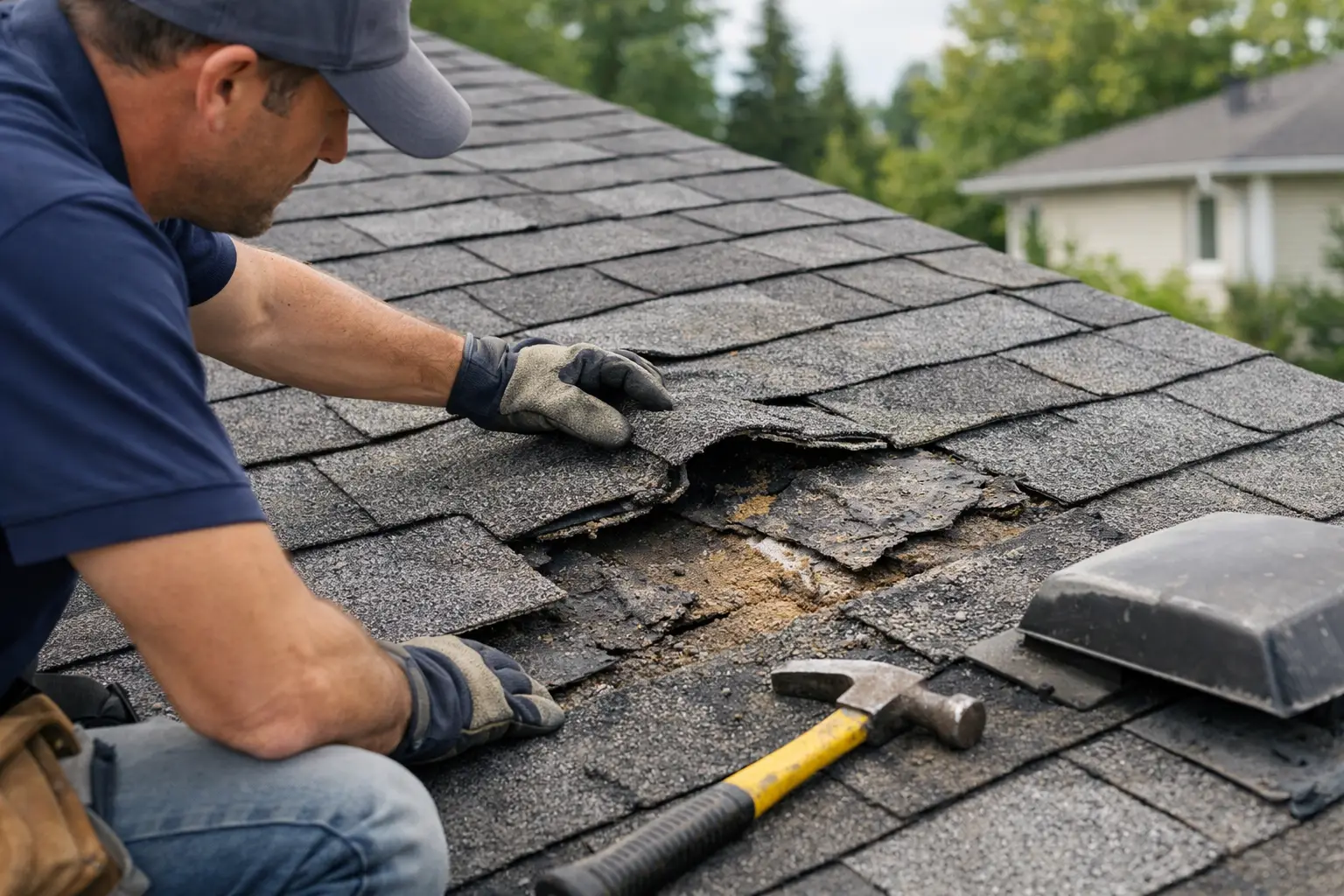
Widespread shingle damage is another major sign. Curling edges, cracking, bald spots where granules have worn away, and shingles that are brittle or missing in multiple areas usually point to overall material failure. When the roof surface can no longer reliably shed water, repairs become temporary by nature.
Interior leaks also tell an important story. One isolated leak around a penetration may be repairable. Repeated leaks in different rooms, water stains that continue to expand, or moisture showing up after every heavy rain often mean the roof system is no longer performing as a dependable barrier.
Sagging is more serious. If any area of the roofline appears uneven, dipped, or soft underfoot, there may be trapped moisture or structural deterioration beneath the finished surface. That is not a cosmetic issue. It calls for immediate evaluation.
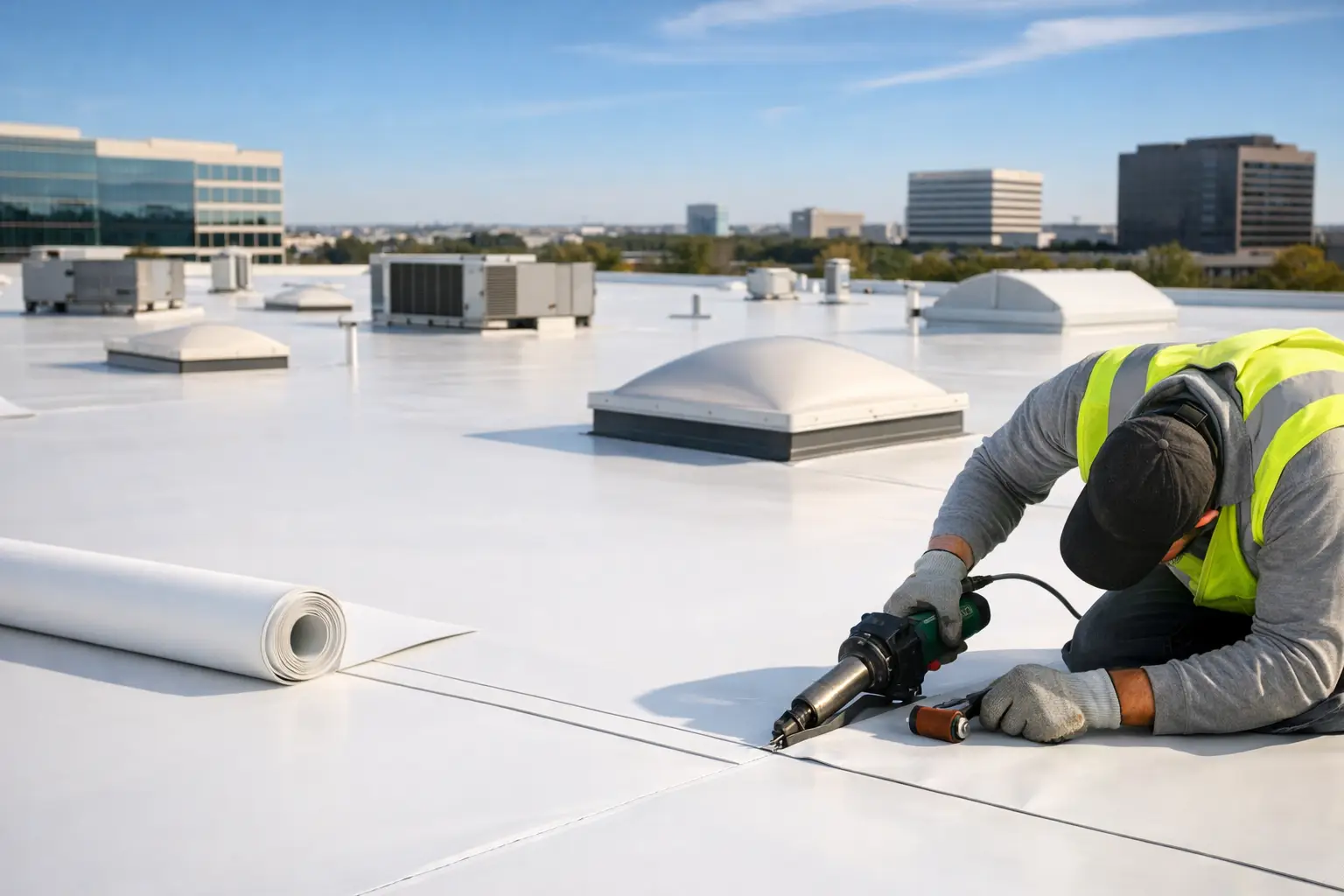
For flat and low-slope roofs, watch for ponding water, membrane separation, blistering, open seams, and recurring drainage problems. These systems do not always show failure the same way shingle roofs do, but they can still be nearing replacement when water remains on the surface too long or the membrane starts breaking down across large sections.
What you can check from the ground and inside the property
You do not need to climb on the roof to notice meaningful warning signs. In fact, for safety and liability reasons, many property owners should not.
Start from the ground. Look for visibly uneven roof planes, damaged or displaced shingles, rusted flashing, and debris patterns that suggest drainage issues. Check gutters and downspouts too. If you see large amounts of shingle granules collecting in gutters, that often signals advanced wear on asphalt roofing.
Inside the attic or upper floor, look for staining on decking, damp insulation, musty odors, and daylight coming through areas that should be sealed. Poor ventilation can also shorten roof life, so excessive heat buildup or signs of condensation matter even if there is not yet a visible leak inside the living space.
Ceilings and walls can offer early clues. Brown stains, bubbling paint, peeling texture, or unexplained mold growth near the top of interior walls should never be dismissed as minor cosmetic issues until the roof has been ruled out.
When roof age matters more than visible damage
Some roofs do not look terrible right before failure. That is why age should never be treated as a footnote.
If a roof is 25 years old and needs another repair, it may still be possible to patch it. The better question is whether that patch buys enough reliable time to justify the cost. Older roofs often become a cycle of recurring service calls, interior touch-ups, and uncertainty every time the forecast changes.
There is also a resale factor. Buyers, appraisers, and insurers pay attention to roof age. A visibly aging roof can affect negotiations, underwriting, and perceived property value even before a catastrophic issue appears. Replacing a roof proactively can protect the asset in ways that go beyond leak prevention.
How to know if roof needs replacement after a storm
Storm damage is not always dramatic. You may not see a tree branch through the roof. What you may have instead is lifted shingles, compromised flashing, punctures from debris, loosened ridge components, or damage that allows slow water intrusion over time.
After high winds or heavy rain, inspect the property from the ground and inside. Look for new debris, metal pieces on the ground, fresh stains, active drips, and any sections that appear shifted or exposed. If the roof was already aging, a storm often accelerates failure rather than causing a completely new problem.
This is also where documentation matters. Clear photos, timely inspection, and an honest condition report can make a major difference if an insurance claim becomes part of the process. A trustworthy contractor should help you understand what is storm-related, what is wear-and-tear, and what level of work truly protects the property long term.
The cost question homeowners and property owners always ask
Many people delay replacement because they assume repair is always the cheaper decision. In the short term, that can be true. In the full life-cycle cost of the roof, not always.
A repair makes sense when it addresses a limited defect on a roof with meaningful service life left. It stops making sense when you are paying repeatedly to preserve an aging system with declining reliability. At that point, you are not really avoiding cost. You are spreading it out while increasing risk.
Replacement can also improve ventilation, insulation performance, drainage design, and weather resistance depending on the system installed. For some properties, especially older homes or commercial buildings with recurring leak history, that added performance is part of the return on investment.
Why material type changes the answer
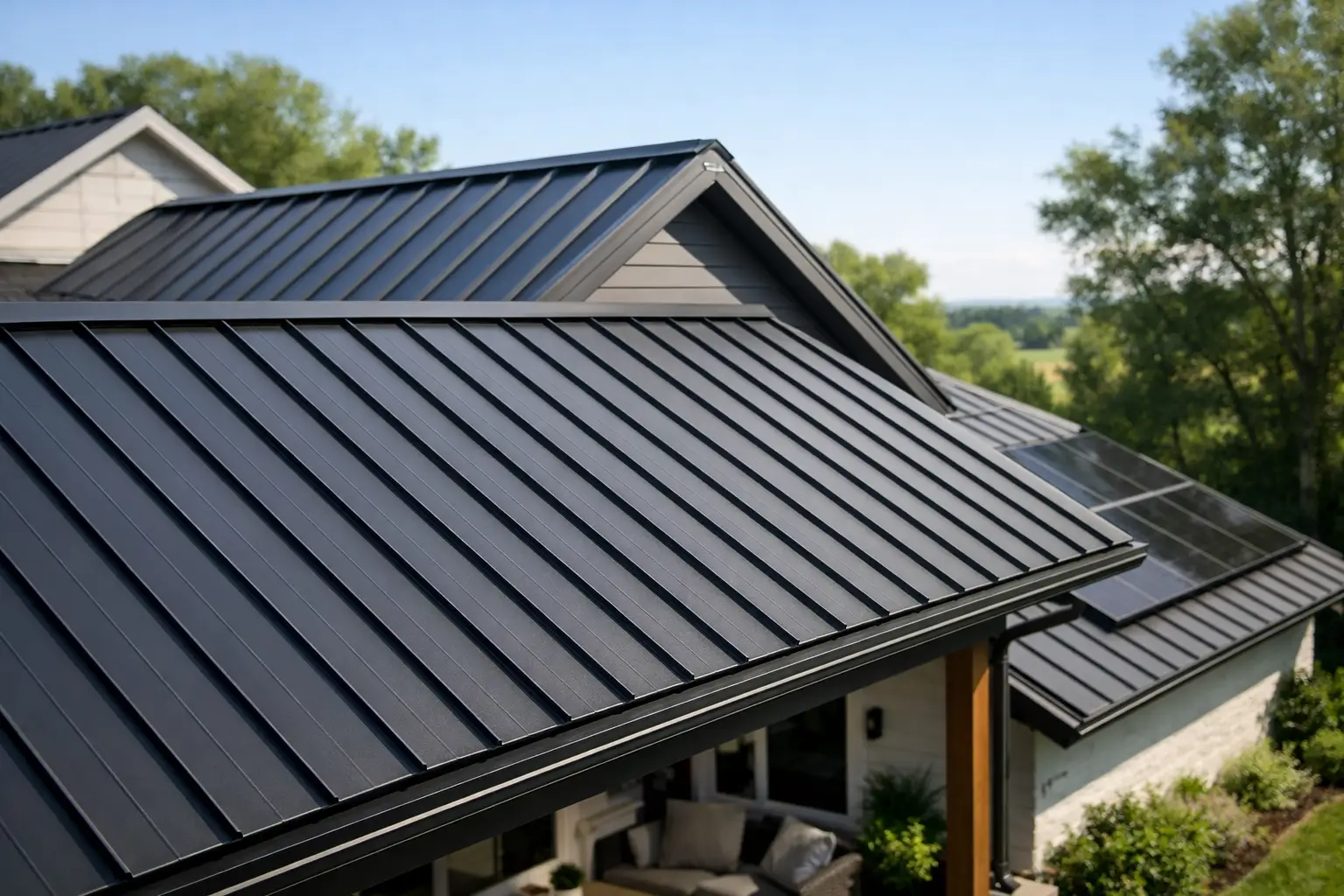
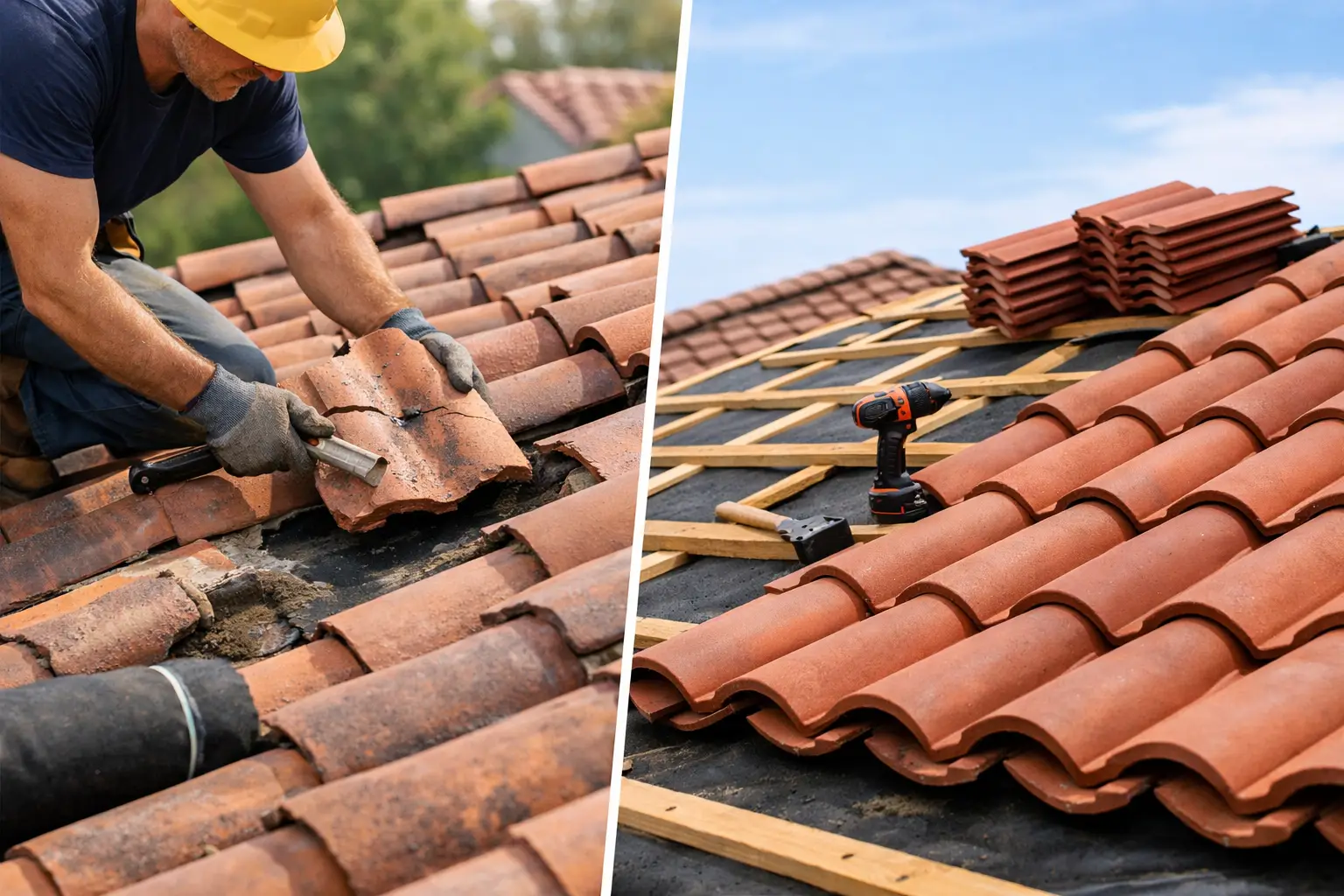
Not every roof ages the same way. Asphalt shingles tend to show wear through granule loss, curling, and cracking. Tile roofs may last longer structurally, but underlayment failure can still require major work even if the tile itself looks intact. Metal roofs can perform exceptionally well, but seam issues, fastener failure, corrosion, or poor installation details can shorten service life. Flat roofing systems such as TPO or torch down depend heavily on seam integrity, drainage, and membrane condition.
That is why a real inspection should evaluate the full assembly, not just the visible finish material. The most reliable recommendation comes from understanding how the system was built, how it has aged, and where it is vulnerable now.
The value of a professional assessment
The strongest roofing decisions are made before water gets deep into the structure. A professional inspection gives you more than a yes-or-no answer. It tells you the roof’s condition, the remaining service life if any, the risk level, and whether repair or replacement is the more responsible investment.
For property owners who value transparency, the best contractors explain the trade-offs clearly. They do not push replacement for a small issue, and they do not minimize larger failures just to offer a quick patch. That level of accountability is especially important on premium residential and commercial properties where workmanship, material quality, and long-term protection all matter.
At Titanium Roof Innovations, that standard means looking at the roof as a full protective system, not just a surface problem. When the recommendation is replacement, it should be because the evidence supports it and because the goal is to protect your asset for the long haul.
If your roof is aging, leaking, sagging, or showing widespread wear, the smartest move is not to wait for a bigger problem to confirm what the warning signs are already saying. A clear inspection now can give you options while the decision is still yours to make.