A metal roof can look exceptional on a San Jose home, but its value is decided long before the panels are visible from the street. This standing seam metal review looks past the clean lines and premium curb appeal to assess what property owners actually need to know: performance, installation quality, cost, maintenance, and where this system makes the most sense.
Standing seam is one of the strongest residential and light-commercial metal roofing options available. It is not automatically the right answer for every building, however. The right system, panel profile, substrate, and installer matter as much as the material itself.
What Is a Standing Seam Metal Roof?
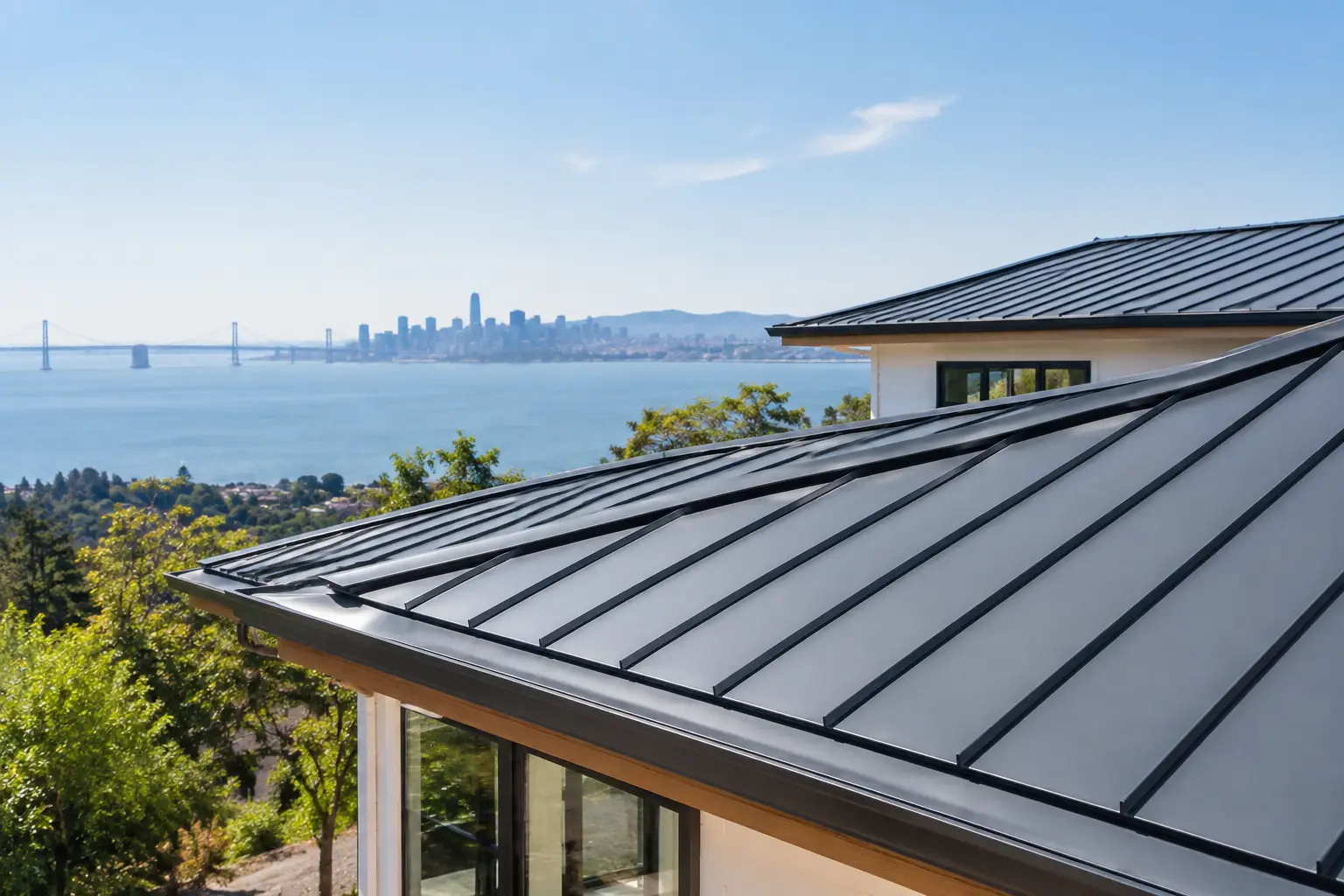
Standing seam roofing uses long metal panels that run from the ridge to the eave. The raised vertical seams lock the panels together while concealing most, and sometimes all, fastening hardware. That detail separates standing seam from exposed-fastener metal roofing, where screws remain visible across the field of the roof.
The concealed-fastener design has a practical purpose. Fasteners are among the most common long-term vulnerability points on a roof because they penetrate the panel surface. By moving attachment points beneath the seams or using engineered clips, standing seam systems reduce direct exposure to water and allow the metal to expand and contract with temperature changes.
For Bay Area property owners, that controlled movement is not a minor detail. Roof surfaces can experience significant daily temperature swings, especially on darker colors and sun-exposed slopes. A properly designed standing seam system accommodates that movement without placing unnecessary stress on panels, seams, or fasteners.
Standing Seam Metal Review: The Real Advantages
The strongest case for standing seam metal is long-term protection. Its interlocking panel design provides excellent resistance to wind-driven rain, and its smooth, uninterrupted surface sheds water efficiently on roofs with appropriate slope. Metal is also noncombustible, which can be a meaningful consideration for properties concerned about wildfire exposure. Fire classification still depends on the complete roof assembly, so homeowners should verify the rating for the specific system being proposed.
Durability is another major advantage. Premium metal panels can resist cracking, shrinking, and the gradual surface loss associated with many conventional roof materials. Unlike asphalt shingles, metal does not rely on exposed granules for weathering protection. With a quality coating, suitable gauge, and correct installation, standing seam can serve as a long-term roofing investment rather than a short-cycle replacement.
The appearance is equally compelling for many homes and commercial properties. Vertical seams create sharp architectural lines that work particularly well with contemporary, modern farmhouse, ranch, and custom designs. The roof can look refined without being overly decorative. Color selection matters, though. A profile and finish that complements the building’s siding, masonry, trim, and surrounding neighborhood will protect curb appeal better than choosing the boldest available option.
Energy performance can also be favorable. Lighter and reflective finishes can reduce heat absorption at the roof surface. Yet metal roofing is not a substitute for proper attic ventilation, insulation, air sealing, or code-compliant underlayment. A roof system performs best when these components are considered together rather than treated as separate upgrades.
The Trade-Offs Property Owners Should Consider
Standing seam is a premium system, and the installation cost typically reflects that. Long panels, specialized trim, custom flashing, concealed clip systems, and skilled labor require greater precision than a basic shingle installation. Complex rooflines with valleys, skylights, chimneys, transitions, or multiple penetrations can further increase the scope.
That higher initial investment does not mean every standing seam proposal offers the same value. A low estimate may omit critical details such as high-temperature underlayment, upgraded flashings, deck repair allowances, snow retention where needed, ventilation improvements, or correctly fabricated edge metal. Comparing estimates line by line is more useful than comparing a single bottom-line number.
Noise is another common concern. When installed over proper decking and a complete roofing assembly, rain noise inside the home is generally not dramatically different from other roof types. The perception often comes from metal installed over open framing in barns or older structures. The actual result depends on the deck, insulation, attic configuration, and interior ceiling construction.
Oil canning deserves an honest mention as well. This is a visible waviness that can occur in wide, flat metal panels under certain lighting conditions. It does not usually affect water performance, but it can disappoint an owner expecting a perfectly flat appearance. Narrower panels, textured finishes, striations, and thoughtful panel selection can reduce its visibility. A professional contractor should discuss this possibility before materials are ordered, not after installation.
Installation Determines Whether the Roof Performs
Standing seam metal is not a material that should be treated as a cosmetic overlay. The roof deck must be evaluated for soundness, moisture damage, and fastening integrity before the new system is installed. Soft decking, deteriorated sheathing, and unresolved framing concerns can compromise even the best panels.
Water management details require the same discipline. Valleys, eaves, rakes, wall transitions, pipe penetrations, chimneys, and skylights need system-compatible flashing. These are not interchangeable accessories. Poorly integrated flashings can create leak paths on a roof that otherwise has excellent panel performance.
Panel layout is also important. A crew must measure the roof accurately, account for panel expansion, align seams, and fabricate trim cleanly at ridges and edges. Long panels demand careful handling because bends, scratches, and distortion are difficult to hide once installed. The finished roof should look orderly from the ground and remain properly detailed where no one sees it.
For older Bay Area homes, the consultation should include ventilation, insulation, and existing roof conditions. In some cases, replacing the roof reveals inadequate intake or exhaust ventilation that should be corrected during the project. Addressing these conditions protects the new roofing system and can improve comfort inside the building.
Choosing the Right Panel and Finish
Not all standing seam panels are built for the same application. Snap-lock profiles can be appropriate for many residential roofs with adequate pitch and carefully specified details. Mechanically seamed panels may be a stronger choice for lower-slope applications or projects requiring enhanced weather resistance, depending on the manufacturer and roof design.
The metal itself matters. Steel is widely used and offers substantial strength when paired with a high-quality protective coating. Aluminum can be an excellent option in environments where corrosion resistance is a priority, though it may carry a higher material cost and requires the right design considerations. Panel gauge, coating system, finish warranty, and compatibility with adjacent materials should all be reviewed before signing a contract.
Color is more than a design choice. Darker colors can show oil canning and heat more readily, while lighter reflective colors may support lower surface temperatures. Coastal conditions, tree coverage, roof orientation, and the building’s architectural style can all influence the best selection.
Is Standing Seam Worth the Investment?
Standing seam metal is often worth considering when the owner plans to keep the property for many years, values a high-end exterior, and wants a roof engineered for lasting weather protection. It can be especially compelling for custom homes, investment properties, and commercial buildings where reduced maintenance risk and long service life support the initial cost.
It may be less practical when the budget is fixed around the lowest upfront price, the roof has extensive complexity that does not justify the expense, or the property owner is planning a near-term sale without a clear market benefit. A premium roof should serve the building and the owner’s plans, not simply follow a trend.
The Titanium Standard is to evaluate the whole assembly before recommending a system. That means looking at the deck, drainage, slope, ventilation, penetrations, and architectural goals – then providing a clear estimate that explains what is included and why.
A standing seam roof should give you confidence every time the weather changes. Choose the system because its details match your property, and choose the installer because they are prepared to protect every detail beneath the panels as carefully as the panels themselves.