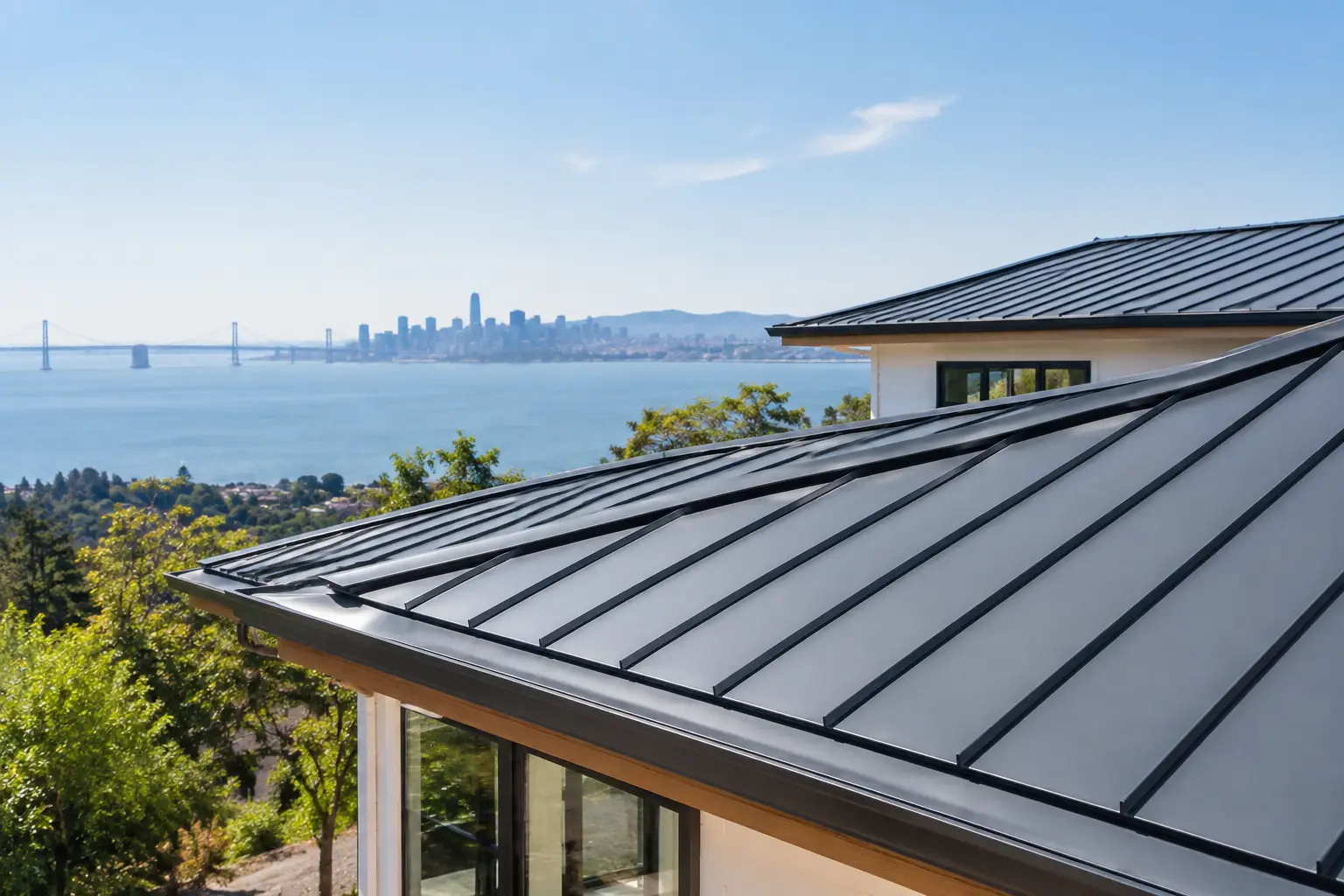

If you’re comparing tpo vs torch down, you’re probably not shopping for a roof for fun. You’re trying to protect a building, control future costs, and avoid choosing a system that looks fine on paper but underperforms once Bay Area sun, ponding water, and years of exposure start doing their work.
For low-slope and flat roofing, these two systems come up often for a reason. Both are proven. Both can perform well. But they are built differently, installed differently, and they solve different problems better. The right answer is rarely about which system is “best” in general. It is about which system is best for your building, your risk tolerance, and your long-term ownership plan.
TPO vs torch down at a glance
TPO is a single-ply membrane roofing system. It is typically installed in large sheets and heat-welded at the seams to create a continuous waterproof surface. Many owners choose it because it is clean-looking, reflective, and efficient, especially on buildings that take on heavy sun exposure.
Torch down is a modified bitumen roofing system, usually installed in multiple layers. It uses heat during installation to bond the membrane to the roof surface. A 3-ply torch down system is known for thickness, durability, and a strong track record on residential and commercial flat roofs.
That basic difference matters. TPO aims for efficient waterproofing with fewer layers and reflective performance. Torch down leans into redundancy, thickness, and physical toughness.
What matters most when choosing between TPO and torch down
The first thing to look at is not the product brochure. It is the roof itself. The size of the roof, the amount of foot traffic, the drainage pattern, the number of penetrations, and the condition of the substrate all affect which system will perform better.
A large commercial roof with broad open spans may be a strong fit for TPO because the membrane can cover more area efficiently, and the reflective surface can help reduce heat absorption. A smaller flat roof over a garage, addition, or multifamily section with more detail work may lean toward torch down, especially if the owner wants a thicker assembly and proven layered protection.
Budget also matters, but not just the initial number. Owners who focus only on installation cost often miss the real financial question: what will this roof cost to own over 15 to 25 years? That includes maintenance, repairs, energy performance, and how soon replacement becomes necessary.
TPO roofing: where it stands out
TPO has earned its place because it solves several common roofing concerns at once. Its bright, reflective surface can reduce rooftop heat gain, which may improve energy performance in warmer climates. For commercial buildings or homes with extensive low-slope sections, that can be a meaningful advantage.
It is also lighter than a built-up layered system, which can be helpful depending on the structure below. The seams are heat-welded rather than simply adhered, and when installed correctly, those welded seams are a major strength of the system.
TPO often appeals to owners who want a modern membrane roof with a cleaner appearance and fewer installation layers. On the right building, it can deliver excellent waterproofing and strong value.
That said, TPO is only as good as its installation quality. Seam welding, detailing around penetrations, and proper substrate preparation are not optional. A rushed crew can turn a promising system into a future leak source. Material quality also varies by manufacturer, so not all TPO roofs perform the same over time.
Torch down roofing: where it stands out
Torch down remains a trusted option because it is tough, thick, and forgiving in many real-world conditions. A 3-ply torch down roof gives you multiple layers of protection, which many property owners appreciate when durability is the top priority.
This system tends to perform well on roofs that see occasional foot traffic or where owners want a more substantial roofing assembly. It has been used for years on residential and commercial low-slope roofs because it offers a dependable waterproof barrier when installed with care.
Torch down can also be a strong option for complicated roof layouts. Transitions, edges, and smaller sections can often be detailed effectively with modified bitumen systems.
The trade-off is that torch-applied installation involves an open flame, which means safety protocols matter a great deal. On occupied properties, especially those with wood framing or other fire-sensitive conditions, the contractor’s process, oversight, and jobsite discipline become a major part of the decision.
Lifespan and long-term performance
When owners ask which roof lasts longer, the honest answer is that it depends on material quality, installation standards, ventilation and insulation design, drainage, and maintenance. Both TPO and torch down can fail early if installed poorly. Both can serve well for years if the roof assembly is designed and installed correctly.
TPO generally performs best when the roof drains properly, the membrane is protected from avoidable punctures, and the seams are expertly welded. Torch down tends to hold its own in demanding conditions because of its layered build, but it still depends heavily on flashing quality and detail work.
In practice, lifespan is not just about weather resistance. It is also about how the system responds to movement, heat cycling, service traffic, and repairs over time. A roof that looks good on day one but becomes difficult to maintain is not a premium solution.
Energy efficiency and heat reflectivity
This is one of the clearest differences in the tpo vs torch down conversation. TPO is usually the stronger performer when energy efficiency is a top priority. Its reflective surface helps bounce sunlight away rather than absorb it, which can lower roof temperatures.
For some commercial properties and some homes with substantial low-slope roof areas, that can contribute to better indoor comfort and reduced cooling demand. In a warm climate, that benefit deserves attention.
Torch down is not typically chosen for reflectivity first. It is more often chosen for durability and layered protection. Coatings can improve reflectivity in some cases, but if cool-roof performance is high on your list from the start, TPO often enters the lead.
Repairs, maintenance, and real-world ownership
No roof should be selected as if it will never need attention. Flat and low-slope systems should be inspected, maintained, and repaired before small issues spread.
TPO repairs can be straightforward when the damage is isolated and the membrane is still in good shape overall. But matching materials, addressing seam failures, and diagnosing water migration still require experience. A membrane system can hide problems if leaks travel before becoming visible inside.
Torch down repairs can also be effective, especially when damage is localized. Because it is a layered system, some owners feel more confident in its repairability and toughness. Still, repair quality matters just as much as the original install.
The larger point is simple: the best roof for long-term ownership is the one installed with precision and supported by clear maintenance guidance. Premium materials alone are not enough.
Cost: upfront price vs total value
Torch down and TPO pricing can vary based on roof size, tear-off requirements, insulation needs, edge metal, penetrations, and substrate condition. There is no honest universal price winner without looking at the actual project.
TPO may offer strong value on larger roofs where installation efficiency and energy savings support the investment. Torch down may justify its cost when an owner values multi-layer protection and durability over a long hold period.
This is where transparent estimating matters. A low number that skips insulation upgrades, edge detail corrections, or substrate repair is not really a lower-cost roof. It is just an incomplete one.
Which roof is better for your property?
If your priority is reflectivity, lighter weight, and a modern single-ply system for a broad low-slope roof, TPO may be the stronger fit. If your priority is layered protection, rugged durability, and confidence in a thicker roof assembly, torch down may be the better answer.
For homeowners, the decision often comes down to the roof layout, how long you plan to stay in the property, and how much emphasis you place on energy efficiency versus assembly thickness. For commercial owners and property managers, service access, rooftop equipment, and long-term maintenance planning often carry more weight.
At Titanium Roof Innovations, we look at these systems through one standard: how well they protect the asset over time. That means no one-size-fits-all recommendation and no pushing a system just because it is easier to sell.
A roof is not just a line item. It is a protective system sitting over everything you value underneath it. The best choice is the one that fits the building honestly, is installed without shortcuts, and gives you fewer reasons to worry five, ten, and fifteen years from now.